




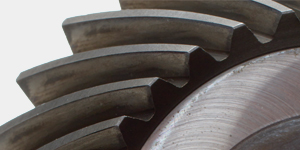
For many companies that deal with highly technical applications, the gears that are designed and created for those applications must be of the highest precision.
That task is such an essential part of Precision Technologies’ (PTI) makeup, that it’s literally a part of its name.
“With investment in employee skills and the latest gear grinding and gear inspection equipment, PTI sets the standard for high precision gear manufacturing,” said Colin Palin, technical sales director at Precision Technologies. “With the managing of the full supply chain, PTI can either fully machine or manage all prosesses to supply fully finished, high quality gears for all industries.”
High Quality, High Accuracy
What that translates to is gear production that must be accurate 100 percent of the time, according to Steve Lewis-Brammer, group business development director at Precision Technologies.
“Effectively, we’re at the top end and produce high quality, high accuracy precision ground gears for applications where performance is a must, and failure is not an option,” he said. PTI’s products are used in mission critical applications, according to Lewis-Brammer.

“That can mean us finding manufacturing solutions where other manufacturers and their products may have issues,” he said. “It’s a combination of technology, engineering know-how, and experience coupled with our skilled and experienced team — including both the costing and manufacturing teams. We also produce master gears that more commercially produced gears are tested against to confirm they meet the required standards as well as gauges used in the oil & gas and automotive industries.”
That boils down to PTI’s dedication to offering any solution to its customers’ problems, according to Palin.
“That means both in timescales — and technically — by ensuring it’s right the first time, every time,” he said. “This is crucial to customer projects.”
This goes beyond just physically producing gears, according to Lewis-Brammer.
“It extends back to understanding what the component will be used for, what demands will be placed upon it, and offering technical advice where we feel a component can be improved to give our customers complete peace of mind that what they are getting will perform and do the job they need it to,” he said.
Re-assurance at the Start
PTI’s core values, collaboration, integrity, and experience gives customers re-assurance at the start of projects, according to Palin. “We can offer technical solutions to manufacturing problems and give confidence early in the design process to help aid in providing components that will be accurate and perform to the maximum,” he said. “Customer relationships are more like partnerships than a customer-supplier relationship.” Over the course of PTI’s history, there has been a shift of focus to the front end of a project conversation, according to Lewis-Brammer.
“Understanding the requirement fully is critical,” he said. “Even though we’re technically a ‘make to print’ company, our customers have come to rely on our technical feedback to help them design gears that will perform at the extremes of their capability. It’s that technical partnership with us — effectively forming part of their engineering team — that has really evolved with some of our customers calling us their ‘safety net.’”
Inspecting Parts
Parts inspection is also a critical aspect of PTI’s expertise, according to Lewis-Brammer.
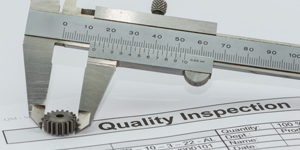
“We place as much emphasis on inspecting parts as we do in manufacturing them — something that most modern manufacturing philosophies have moved away from,” he said. “As a result, we have more inspection stages throughout the manufacturing process as well as a final inspection vs. the in-process inspection and distortion prediction used by many manufacturers that produce to more commercial specifications.”
The main evolution in gear manufacturing at PTI is with its gear grinding and inspection capabilities, according to Palin.
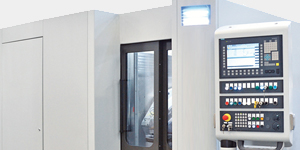
“Many R+D gears have high macro geometry, which, years ago, was not required,” he said. “We have invested in the latest gear grinding machinery with the Hofler Viper 500, and, to support this, we have also invested in gear inspection equipment with the Klingelnberg P65.”

Customer Relationships
Working with the customer has also evolved over the years, according to Palin. TEAMs calls have been the normal approach post-Covid.
“Technical meetings are usually the first approach, and PTI offers advice on best machining methods, while advising on tolerancing and what is achievable to give a cost effective, but ultimately, high-performing component,” he said. “This way, the design is not compromised later on when features are not correct to the original intent.”
That technical evaluation and understanding of a component’s function is key, according to Lewis-Brammer. “Whereas most ‘make-to-print’ manufacturers will make what is in the drawing, we challenge it when we think there is an opportunity to improve it (in a positive way), because we want it to be right,” he said. “When a new customer works with us for the first time, this can be a bit of a shock, and they often tell us, ‘Our other manufacturers don’t do this.’”
However, if that interaction highlights a potential issue, the customer quickly realizes the value, according to Lewis-Brammer.
“Many customers work with us again for that reason alone, especially with software designing more gears and there being less manufacturing knowledge amongst designers — something we’re seeing across all industries,” he said. “Once we fully understand the need, we can match our capability to it, including advising on the best machining methods to use, advising on tolerancing and what is achievable to make it a cost effective, and, most importantly, a high-performing component.”
NDA Customers
Working with highly technical components means PTI isn’t at liberty to discuss some of its customers due to confidentiality agreements; however, Palin emphasized that the company has been a key supplier to race engines. “We have been a key supplier to race engines — F1 in particular — which means engines that have won multiple races but also team and driver championships,” he said. “To be a major part of that makes me personally very proud that we helped in that. As a customer once said, ‘without you guys, we couldn’t have gone racing this year.’” In addition to producing components for race engines, Lewis-Brammer said PTI is also particularly proud of producing components that its customers had previously sourced elsewhere.

“This occurred where they’d had issues with them; then we made those same components, and our gears delivered the performance the customer required,” he said. “We’ve also been able to manufacture components others had struggled with due to the precision and accuracy needed.”
Lewis-Brammer notes one example when PTI was involved in making the quill gear designed by Keith Duckworth for the legendary Cosworth DFV engine for historic motorsport engines. “That engine won 155 Grand Prix — 65 percent of all the races it competed in between 1967 and 1983,” he said. “The compound gear has a number of quills in it, and each one has to be individually precision ground and matched to the gear.” There are very few companies in the world who could do that today, according to Lewis-Brammer, as the skills and the knowledge needed to produce it are rare.
“That knowledge is becoming even rarer by the day as engineers rely on technology to do more of the work, and modern education focuses on sexier high-tech machines and software rather than labor and time intensive hands-on skills development,” he said. “When we show the engine and gears at an exhibition, it always attracts a lot of conversation, and engineers and enthusiasts combined marvel at it. It really is something special, and I was really taken aback by the reaction to it the first time I was on one of our exhibition stands.”
Company Beginnings
PTI started in the 1960s as Frederick Yates Engineers, a toolmaking business, according to Palin. Rapid expansion led to the manufacturing of forge tools for the automotive industry, resulting in the supplying of forge tools all over the world for the GKN group. This meant supplying those forging tools in Birmingham, U.K.; Germany; the U.S.; and Mexico.
The mid 1980s saw the creation of Spline Masters that designed and manufactured spline gauges and master gears for the automotive and aerospace industries. By the 1990s, the desire for higher quality components in F1 engines became a need. At this time, FA Yates & Spline Masters was renamed as PTI, which came with new ownership. Precision Engineering Solutions was formed in order to expand PTI’s portfolio even further. While the forge tooling side of the business declined, the motorsport side blossomed with regular supply into F1, WEC, Indy Car, and WRC.
“These areas are still well serviced today,” he said. “The Aerospace AS9100 accreditation was achieved in 2020 to add to ISO9001 and ISO17025. PTI is now able to supply directly into Tier 1 aerospace and defense customers.”
Pushing Boundaries into the Future
With PTI’s extensive portfolio of skills and expertise, Palin said that, as motorsport continues to re-invent itself, the company will continue to push the boundaries in manufacturing technologies and tolerances.
“The aerospace and defense industries are growth areas, as are the new powertrain solutions with electric and hydrogen technologies that will only expand and improve further,” he said. “Gears will be around for many years to come, and we will be a part of that supply chain.” To that end, modern design software continues to identify how components can be made lighter and stronger, according to Lewis-Brammer.
“As the old saying goes, ‘The only constant is change,’” he said. “Newer manufacturing technologies such as additive manufacturing are improving, as are the ranges of materials being developed for them. As such, our customers’ requirements will continue to evolve, and whether it’s individual component design and geometry; the number of components that will be used in an engine, pump, or gearbox; or the loads they will need to carry as well as the power they will need to transmit, there will be new challenges. Paraphrasing Winston Churchill, ‘Sometimes, the best way we can prepare for the future is by looking to the past.’”
There will be fewer specialist companies such as PTI due to the continued move toward producing components in an ever more cost-conscious economy.”
That means that what sets PTI apart will also put the company in a good position as it looks to the future, according to Lewis-Brammer. “Our experience, skills, and knowledge, coupled with embracing newer developments in materials and technology will — we trust — prepare us to continue to be at the forefront for helping our customers achieve their goals,” he said.
More info: precisiontechnologies.co.uk


