




As long as companies need to make gears, gear cutting machines and gear inspection machines will continue to be crucial components of a shop floor.
Getting the right machine and keeping them running with the proper maintenance is a decision every gear-manufacturing company must face, so it’s important to work with a distributor that knows the equipment inside and out.
Involute Gear & Machine Company has been helping companies, both big and small, find the best equipment for making and inspecting the gears they make.
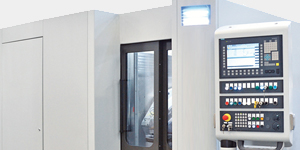
“Our primary business is selling gear cutting machines, the Kashifuji line of hobbing and gear inspection machines, and Osaka Sumitsu, known as OSK,” said Rodney Soenen, president of Involute Gear & Machine Company. “They make analytical gear inspection machines and gear rolling machines. We also manufacture red ring gear hones. We bought all the machines and equipment from NACHI when they closed down their gear hone line.”

Working with all sizes of companies
Soenen said Involute has been able to take its expertise serving smaller companies and work with larger ones.
“We enjoy taking care of a smaller company that maybe wants to get into gear hobbing and gear inspection,” he said. “But recently, we’ve also been able to crack the big market with our Japanese transmission companies. We’ve been able to sell hobbing machines and gear inspection machines there. We don’t care how big you are. We treat you all the same. For example, I won’t mention names, but a Japanese company is a large part of our business.”
This Japanese company has eight of Involute’s hobbing machines and 25 of its gear inspection machines.
“There’s quite a lot of spare parts business and additional training and calibration for that business,” he said. “But we also have a lot of customers who only have one of our machines, one hobbing machine, one of our gear inspection machines. So, essentially, we treat each customer as if they’re our only customer. We are a small company. We haven’t got hundreds of customers. We’d like more, but we have enough. We do OK here.”
Navigating the industry
Being a distributor means Involute has to expertly navigate an evolving industry in order to properly serve its customers, according to Soenen.
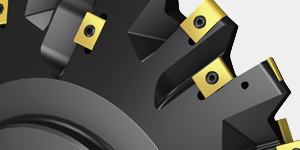
“We’re at the mercy of the industry and that technical advantage because we don’t build anything here,” he said. “We have our own hone tools, but it’s very small part of our business. We can be at the mercy of the guys in the cutting tool business. The biggest change in the industry we’ve seen is the continuous development of cutting tools. We’ve been dry-hobbing for many, many years now, but the advances in the cutting tool business drives the machine tool business like hobbing machines, because then we have to make faster machines that can run at higher RPMs along with different designs to handle the chip removal.”
Serving customers’ needs
But the needs of the industry are reflected by what the companies want, according to Soenen.
“We are driven by what our manufacturers are capable of, and they are driven by the market, which is sometimes driven by the customer and competition, of course,” he said. “Kashifuji is the largest manufacturer of gear hobbing machines in Japan. They’re a hundred-year-old company, and OSK is the largest manufacturer in Japan of their equipment, and they’re north of 65 years old, too. They’re the oldest and the largest in what they do.”
To that end, Involute has the expertise that enables it to assist whatever type of customer that comes its way, according to Soenen.

“We have two kinds of customers: Customers that are already in the gear business, they pretty much know exactly what they want,” he said. “They’re quoting a job, for example, to an automotive company and they say, ‘OK, this is our part. This is what we have to do. This is the cycle time we want.’ We respond with: This is what we can do for you. This is the type of automation you want. Do you want to chamfer on the machine? Do you want to inspect the gears in line or offline?’ These companies are already an established gear house. They’re just looking for equipment to handle their quoting if they get the job.”
The other type of customer Involute serves is the small shop, according to Soenen.
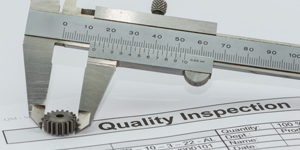
“They may have a few old Barber Colman machines — those machines are 50 and 60 years old,” he said. “And quite often it starts with our gear inspection business, which is actually doing very well. We offer that as a service. They’ll send us their gears and want us to look at them when their customers are rejecting them, and we inspect them. We can make an analysis and are in a good position to do that. We sell the hobbing machine so we know what they can do or can’t do, and we also sell the inspection machine.”
Understanding the business
For small companies, a gear machine can be a big investment, and Soenen said more companies are coming to Involute for solutions to gear inspection, especially with the Trump administration’s tariff hikes.
“With our recent tariff increases, we’ve seen more inquiries of people wanting to bring jobs back to the United States and manufacture themselves to avoid the tariffs,” he said. “For a smaller customer, a $300,000 or $400,000 machine is a big investment for them, as opposed to the big guys who might be buying four or five machines, and they’re ready to spend $2 million or $3 million on equipment, and they’re prepared for that. And we also get customers from our gear inspection business. They want to get into gear hobbing, and we do pretty well in that line of work because we’re small enough that we can take the time to teach them how to hob. They may not know anything about cutting tools. They may not know anything about inspection, but they know they’ve been getting poor quality gears.”
Being available for all sizes of gear businesses helped Involute take on a challenge to compete for a big order from a Japanese automotive transmission builder, according to Soenen.
“We beat out the competition, which already had a bunch of machines there,” he said. “We did it the good, old-fashioned way. We just worked the sale; we worked the customers; we visited them often. They knew who we were because we already had inspection equipment there. We determined what their issues were with Brand X, and we made it possible that they wouldn’t have those issues with us, the distributor. That was a big feather in our cap that we got the order. My friends at Kashifuji said, ‘You don’t have a chance.’ That just added fuel to the fire, so we went after that order, and we got it, and we were very, very pleased with that.”

Starting a Company
Although Involute’s time as a business is relatively short, the expertise behind the company is extensive, according to Soenen.
“We started the company in 2009,” he said. “Several of us that were working at NACHI Machining Technology, formerly National Broach and Machine, decided to start a company when NACHI was going to close down that facility in Detroit — a 300,000-square-foot facility. We didn’t want to relocate to the home office in Greenwood, Indiana. At that time, I was working at NACHI as a sales representative for Casa Fuji and Osaka Sumitsu.”
That prompted Soenen and a few of his friends with equal experience in the machine tool and honing tool business to consider starting a new company, according to Soenen.
“I contacted my friends at Kashifuji and OSK in Japan, and I said, ‘If I start a company, will you guys follow me?’” he said. “I’d already been with them for almost 18 years. I thought they would agree with it, and they did. We started off in a rented building of about 3,000 square feet. We stayed there for three years, and then we purchased our current building at 14,000 square feet.”
Looking to the future
Changes in the industry are no stranger to Soenen and his team at Involute, and he said he will continue to ensure the company is serving its customers with any challenges that may come.
“We see more and more of the sintered gears coming into play as more press people are getting very good at making very accurate gears that way because, in our gear inspection service, we inspect them, and they’re doing a darn good job doing that,” he said. “As soon as they can figure out how to make them more durable, they’ll be in automotive transmissions. We won’t be cutting the teeth anymore. They might still need some grinding, but I see that as a possibility in the future.”
But the essentials of the industry are still strong, and Soenen said he doesn’t see that changing any time soon.
“There’s still a lot people making gearboxes in our business,” he said. “They’re supplying to somebody else, or they’re make their own product of a gearbox. It’ll be a long time before nobody needs gear hobbing machines.”


