






I was recently at a conference outside of the engineering world and was repeatedly asked, “So, what do you do?” I offered that I am the general manager of a metric gear supplier and, after they wiped the glazed look off their face, the reply was, “For cars?” This is pretty much the typical response. People always picture an automotive transmission and stop there. To them, gears are these invisible, greasy things that make a vehicle move. I explain to those who show interest that gears are in many places including industrial automation, the inner workings of a mechanical pencil sharpener, the conveyor belt at the local supermarket, the paper shredder in their office, and the massive drawbridge that leads to the beach.
As a young mechanical engineer just starting your career, you are likely in a similar position to those people I spoke to at the conference, though with a much higher degree of technical potential. You probably spent four years in an ABET-accredited program and yet, if your experience was like most, you received exactly one lecture on gearing in a mechatronics or machine design course. You might have calculated a speed ratio or looked at an involute curve on a slide, but you were likely left with a massive gap between the theory of a “perfect” gear and the reality of a working power transmission system. Today, an important topic you need to master is not just how gearing works, but how the demand for silence and precision in the era of electrification and robotics is fundamentally changing the way we select and manufacture these components.
For decades, the gear industry focused on power density and durability. If a gearbox was a bit noisy, you simply packed it with more grease or enclosed it in a thicker housing. But we are living in a new age. Whether it is the electric vehicle (EV) idling at a stoplight or a collaborative robot (cobot) working alongside a human in a laboratory, the expectation now is total silence. In an internal combustion engine, the roar of the cylinders masks a multitude of mechanical sins. In an EV or a high-precision robot, there is no engine noise to hide behind.
 Every vibration, every whine, and every microscopic imperfection in the gear mesh is magnified. This brings us to the core of modern gearing: the pursuit of system-level harmony through extreme precision and smart material selection.
To understand why this is so difficult, we must go back to the basics that your textbooks likely glossed over. Everything in our world starts with the “module” in the metric system or “diametral pitch” in the imperial system. Think of the module as the “size” of the gear tooth. It is a simple ratio of the reference diameter to the number of teeth. If you get this wrong, nothing else matters. But even if you get the size right, you must deal with the geometry of the involute curve. The involute is the mathematical shape of the tooth that allows two gears to roll against one another rather than slide. Sliding creates friction; friction creates heat; and heat is the enemy of efficiency. In the modern world, where we are trying to squeeze every mile out of a battery or every watt out of a motor, we cannot afford to lose energy to poorly-designed tooth profiles.
I see many entry-level engineers fall into the “CAD trap.” You sit at your workstation and pull up a sophisticated 3D modeling program. You draw a gear with a twenty-millimeter hub, and an eighteen-millimeter bore because the math tells you it fits. On the screen, it looks beautiful. In the real world, you have just designed a part with a one-millimeter wall thickness that is impossible to manufacture with any degree of concentricity. When that gear hits the shop floor, the machinist is going to tell you it cannot be held in a chuck without distorting. Or perhaps you design a gear with a large module but a tiny face width because you want to save space. It might look fine in a rendering, but in a real application, that tooth will not have the surface area to handle the load, and it will fail before the week is out.
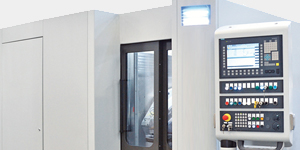
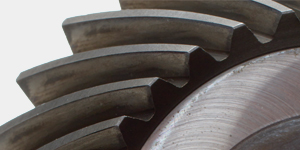
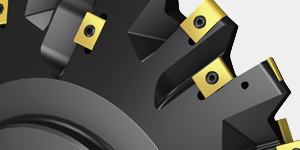
An important shift you must recognize today is the move from “cut” gears to “ground” gears. In the past, many industrial gears were produced by hobbing — a process where a cutting tool creates the tooth shape. This is fine for many applications, but it leaves a surface finish that is relatively rough. For today’s high-speed applications, especially in automation, we must apply gear grinding to the tooth surfaces. This is a finishing process that removes minute amounts of material to achieve a mirror-like finish and incredible dimensional accuracy. This finish reduces the noise, vibration, and harshness (NVH). If you are designing your gearing to operate in a quiet environment, you cannot just pick a standard gear off a shelf and expect it to be silent; you have to understand the AGMA quality levels and why a ground gear might be necessary even if the load doesn’t strictly demand it.
Beyond precision, another consideration is the material. There is currently a surge in the use of high-performance polymers and carbon-fiber-reinforced plastics. The reason for this increase is because they are light and naturally dampen noise. A young engineer might assume that steel is always better because it is stronger, but in the world of robotics, weight is a penalty. A heavier gear requires a larger motor, which requires more power, which creates more heat. By selecting a plastic gear, or perhaps even a “hybrid” gear with a metal hub and a plastic tooth ring, you can achieve a level of quietness and efficiency that steel simply cannot match. However, this comes with its own set of challenges, such as thermal expansion and moisture absorption, which can change the center distance of your gears and ruin your mesh. I always encourage young engineers to think about the “total cost of ownership” rather than just the price of the part. It is tempting to try and design a custom gear for every project because you want to optimize every fraction of a millimeter. But I have spent my career at KHK USA showing engineers that using standard stock components is often the smarter move. Why spend weeks designing custom gearing and months waiting for it to be manufactured when a standard part can be modified to fit your needs? Modern gearing is about speed to market and reliability. The most brilliant design in the world is useless if it cannot be serviced or replaced when it eventually wears out.
Gears typically do all their best work behind the scenes, and it is only when they fail that they become exposed. As an engineer, your job is to keep them hidden. You do this by respecting the physics of the mesh, understanding the limitations of the machine shop, and staying ahead of the trends in noise reduction and efficiency. The “one lecture” you received in college was just the beginning. The real education happens when you hold a physical gear in your hand and realize that the 3D model on your screen is just an idealized ghost. The future of gearing is about making those ghosts real, making them quiet, and making them last. Whether you are working on the next generation of electric delivery vans or a surgical robot, remember that you are not just designing a component; you are managing motion. If you can master the balance between the precision of the grind and the practicality of the shop floor, you will find that gearing is anything but boring. It is the very thing that keeps the world moving forward.


