




Deburring and surface finishing of gears and other critical parts are vital processes in producing quality precision pieces for sectors that demand excellence.
That is why it is necessary to have machines and proven processes that can perform those important functions with speed, accuracy, and efficiency.
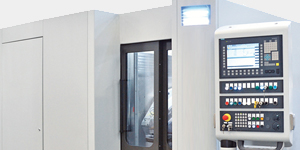
For 80 years, ALMCO has been doing just that with its comprehensive line of high-quality finishing machines for deburring, washing. and drying.
When ALMCO was founded in 1946 at the end of WWII, it was an offshoot of C&S Tool Company out of Minneapolis, and it made various equipment for producing ammunition and guns, according to Tim Grahn, ALMCO general manager.
“ALMCO originally produced deburring equipment for honing gun barrels, and then for finishing other gun parts, as well as tumbling barrels for finishing shell casings and bullets,” he said. “Over time, the company continued to introduce new deburring technology and became a leading manufacturer of vibratory deburring equipment.”

Increasing the equipment line
That equipment included vibratory tubs that use processing media and liquid compounds to finish a wide variety of parts in batches used in mass production applications, according to Grahn. That batch size varied based on the size of both the machine and the parts.
As the company evolved, it introduced spindle burring machines into its product offering.
“Those differ in that they finish parts, such as gears, by putting them on a spindle, and then that spindle is lowered into a rotating tub of abrasive media and liquid compound,” Grahn said. “Then that spindle rotates and exposes all sides of the parts to the flow of the media, processing the part all the way around. This process provides very short processing times, which are typically less than a minute. These machines were hand-loaded originally, but later they were more often robot-loaded.”
With a successful product line of deburring machines in its arsenal, ALMCO began producing industrial parts washers, according to Grahn.
“Those were sold because the deburring applications would leave a residue from the deburring media on the parts, and so the washing came along in order to remove that deburring residue,” he said. “Eventually, that became a product line that we sold separately from the deburring system. We sell parts washers today for every kind of application requiring washing, and it’s not tied directly to one of our deburring machines. Although we still occasionally sell a deburring system and a washer to the same company at the same time, they’re not usually tied together.”
ALMCO continued to add to its line when it purchased the Sutton spindle deburring line in the late 1980s, according to Grahn.
“ALMCO still produces that Sutton line,” he said. “Most of those machines are for finishing aircraft parts, and primarily they’re made for finishing blades and disks and blisks.”

Celebrating eight decades
As it celebrates 80 years in the business, ALMCO has a broad product offering of equipment and supplies, according to Grahn. “We sell media and compounds that are used with the machines, and our machines are used in a wide variety of industries,” he said. “We’re in aerospace and defense, automotive, guns and ammunition, heavy construction machinery, agricultural machinery, hardware and fasteners, non-aerospace engines like jet engines and turbines, rail, foundries and machine shops — just about every kind of industry.”
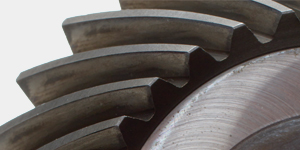
And, of course, those applications include the deburring and finishing of gears, according to Grahn.
“Over the years, there’s been a lot of gear applications that might include very simple spur gears that are about two and a half inches in diameter and require deburring only,” he said. “There have been many shapes and sizes of gears and gear types. We’ve done several spindle machine projects for steering gears, and that’s more about the surface finish than it is about deburring.”
Solving customers’ problems
Simply supplying the right machine would be all some companies would expect to achieve, but at ALMCO, Grahn said it goes beyond that to actually wanting to solve the customers’ parts finishing need.
“We don’t want to be just an equipment builder, we want to solve the problem, and so our whole team really cares about the results,” he said. “Instead of just selling the equipment, we develop the process; we figure out which solution works best for the customer, and then we quote the equipment to achieve the results that the customer needs. Most gear-finishing applications, for instance, in order to meet high production demands, have become automated. But our philosophy for gears, and in general, is to do it right. That involves the process, and the entire customer experience. Our goal is to do that right for gear manufacturers, and also for other manufacturers.” As ALMCO has evolved over the decades, the process of finishing gears may seem the same, but the machines used to run those processes have changed, according to Grahn.
“There are better controls and automation, so even though the general function is the same, the improved controls and equipment and processing media and compound allow better and much more consistent results than, let’s say, the same machine built 20 years ago.” he said. “On a second note, the quality of the parts coming into our machine is much better because the machining processes are much better.”

Because the parts going into ALMCO’s equipment are now of a higher quality, it makes the final process take less time for the same results, according to Grahn.
“The machining tools have gotten so much better that it doesn’t create much of a burr, and some companies just machine the burrs off because the machines are faster,” he said. “In those cases, our process just blends it. It doesn’t really remove a burr. It’s just blending the surfaces. It allows our machines to produce a better part faster than what we used to be able to.”
Expert sales people
In addition to expert equipment, ALMCO has expert sales people who have the proper skills to discuss a customer’s needs in detail, according to Grahn.
“All of our sales managers have a minimum of one year of training in our process lab, and that might last up to three years depending on when we’re ready to send another person out in the field based on need or an opening,” he said. “All of our sales managers have a lot of experience in the lab, and they really know a lot about processing and about all of our supplies, media, and compounds.”
To that end, when a customer approaches ALMCO with a challenge, the sales manager will meet with that customer to identify its needs, according to Grahn.
“In most cases, we try to get the customer to send parts into our process lab,” he said. “We offer free in-house process development, and that applies for both cleaning and deburring, so both of those would apply to gears. Over time, we have sold more and more washing equipment for gears. In the past, it was mostly deburring equipment.”
The collaborative process between ALMCO and the customer continues with a parts and drawings viewing with the sales manager, the engineering staff, and ALMCO’s lab manager where a test plan is developed to achieve the desired results, according to Grahn. “We follow through and do the testing,” he said. “After testing, we provide samples to the customer and show them the results that we think are the best, but we’ll give them a few additional samples because sometimes they’ll say, ‘I really like this one better because of the appearance of the part,’ even though it may have a rougher surface finish.”
After that, a comprehensive solution is offered that considers the customer’s production quantities, plant layout, budgetary needs, finish requirement, and required consumables, according to Grahn.
“Our goal is to consider the customer’s entire operation — not just sell a machine,” he said. “That’s why I say our goal is: We sell results, and we do it right. We’re not just selling equipment. The equipment is how we achieve the results.”

Looking to the future
ALMCO’s results-oriented philosophy should serve it well as it enters its ninth decade of service to key niches in the manufacturing sector, according to Grahn.
“I think that it’s going to continue to evolve in that the machining processes are going to keep getting better, and the parts that we receive are going to keep getting better before we even receive the parts,” he said. “ALMCO equipment will continue to provide value for deburring and for providing good surface finishes. There’s going to be more emphasis on accelerated surface finishing via chemistry — like an acid chemistry — that will accelerate the deburring process. It can create very good Ra finishes in a short amount of time, even in a vibratory deburring machine, which is typically a slower process. We’ve been testing with accelerated surface finishing in spindle machines with a goal of reducing spindle deburring times even further.”
Concurrently, Grahn sees ALMCO’s washer line continuing to be an important part of the manufacturing process.
“We are going to keep doing a better and better job on cleanliness,” he said. “Our customers keep requiring higher levels of cleanliness, and we continue to find a way to provide it. That’s just going to continue to improve, and we’re going to be able to offer gears that are extremely clean. And that means fewer failures and less wear out in the field.”


