




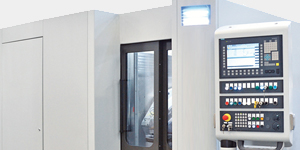
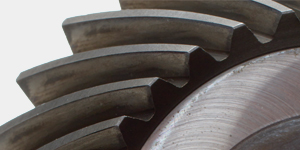
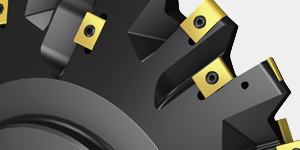
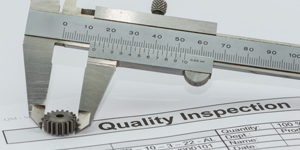
The second generation of Kadia’s E line marks a decisive step forward for Kadia toward even greater precision, productivity, and technological density.
Nearly 10 years after the launch of the first E line, the machine has been comprehensively redesigned — from the spindle concept and working area to the measuring and control technology. The objective is clearly defined: High-performance honing. Superior quality. Maximum productivity. This ambition shapes the entire series and precisely describes what the new E line delivers to manufacturing operations: maximum accuracy and outstanding cost-efficiency within an ultra-compact machine concept.

“The E line series is the cost-efficient entry into high-performance honing,” said Henning Klein, managing director of Kadia Produktion GmbH + Co. “From prototype production and small batches to economically optimized series machining, we now cover a very broad application spectrum.” This includes honing bores starting at approximately 1.5 mm in delicate small components, as well as machining tasks up to 40–50 mm in diameter — for example in hydraulic components or precision automotive parts.
At the heart of the new machine is the completely redesigned LH2x honing spindle, which consolidates experience from more than 1,000 LH spindles sold into an entirely new platform. Three direct drives for oscillation, rotation, and expansion are housed within a highly rigid monocoque structure that minimizes vibration and reliably absorbs high dynamic forces. Four patents underscore the technological ambition of this development. Compared to the previous LH2, the new spindle generation offers significantly higher cutting speeds, increased material removal rates, greater versatility, and improved serviceability. Larger volumes of material can be removed in shorter timeframes, machining times are reduced, and cycle times decrease — without compromising process stability. For components with demanding geometries, the improved temperature and power stability further enhances machining accuracy and reliability.
The working area has also been significantly expanded. The new rotary table provides approximately 30 percent more diameter for fixtures, substantially broadening the range of components that can be processed. The machine automatically detects the moving mass and adjusts transport speeds accordingly: heavier components are moved more gently, lighter ones more dynamically. This adaptive control reduces imbalance, extends the service life of mechanical components, and lowers wear and maintenance costs over the machine’s lifecycle. Additionally, access to the loading and unloading station has been widened by 12 percent, considerably improving manual loading ergonomics.
The machine bed is now 10 percent heavier and designed with a double-wall structure, increasing rigidity and further enhancing vibration damping. Despite these technical enhancements, the E line requires only 2.8 m² of floor space. The fully enclosed rear design and side access to all maintenance and electrical cabinets enable space-saving installation close to walls — a major advantage in production environments where layout compatibility and floor efficiency are critical.
The E line remains a three-station machine in its basic configuration, consisting of a loading/unloading station, honing station, and measuring station. For the first time, an integrated deburring unit can be incorporated into the loading and unloading station, including an automatic brush changer. This removes loose machining burrs directly after honing — increasing process reliability and component cleanliness. The coolant system remains fully integrated but now features significantly improved filtration fineness of 10 µm (previously 25 µm). This ensures more consistent oil quality, reduced tool wear, and more stable machining parameters. Thanks to the double-wall bed design, external drip trays are no longer required. An optional extraction module efficiently removes coolant mist, keeping the working environment noticeably cleaner.
A key pillar of the high-performance concept remains the HMC100 control system, which together with the spindle technology forms the technological core of the machine. The latest operating system version significantly expands capabilities for complex applications. Continuous contour scanning of the entire bore has now become the standard measuring method. The machine captures up to 500 measurement values per millimeter of bore length, generating an exceptionally precise representation of the geometry — including areas that are difficult to access using conventional measurement techniques. This level of measurement accuracy substantially increases process reliability.
The measuring station has also been further developed. An optional rotary measuring axis can now be integrated. This system automatically detects the orientation of the workpiece and positions the measuring probes accordingly — a significant advantage for components with longitudinal grooves or cross-bores.
The E line is aimed at manufacturers requiring the highest precision in small– to medium–batch sizes, while simultaneously demanding economic efficiency, flexibility, and a compact footprint.
More info: www.kadiausa.com


