





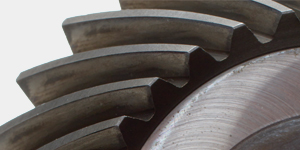


The increasing demand for sustainability and e-drive transmissions is reshaping the gear industry, requiring mitigation of noise, vibration, and harshness (NVH). In this scenario, laser powder bed fusion (L-PBF) is a promising additive manufacturing technology offering design freedom while maintaining a mechanical behavior suitable for gear application. Despite the capabilities of AM, there remains a gap in systematically applying its design freedom to enhance the vibration behavior of gears. This study proposes a method that takes advantage of the design freedom of L-PBF to enhance the damping behavior of a pinion gear while simultaneously reducing its mass. The proposed method reduces the component’s weight by topology optimization, while the topology optimization is calibrated simultaneously to ensure stiffness modifications resulting from the structural changes that enhance NVH characteristics by improving the component’s damping. Additionally, the method incorporates transmission error simulations, enabling informed design decisions that help avoid resonance frequencies. Applying this method resulted in an approximately 22 percent reduction in gear weight and a substantial improvement in damping properties. Moreover, the stiffness modifications adjusted the transmission error pattern, effectively avoiding critical frequencies. The method supports the development of advanced and sustainable gear systems tailored to the future demands of electromobility.
1 Introduction
The removal of internal combustion engines in electric vehicles (EVs) significantly reduces overall noise levels, thereby making other noise sources, such as those from airflow, tires, and, notably, transmission systems, more perceptible [1]. This shift presents a critical design challenge, as electric motors operate under different conditions than their combustion counterparts, including higher speeds and increased starting torques. To improve torque efficiency and reduce mass, EV gearboxes typically feature fewer gear stages, taking advantage of the high torque characteristics of electric motors [2, 3]. Consequently, the change in dominant noise sources alters passengers’ subjective acoustic experience [4].
One of the main sources of gearbox noise is the transmission error (TE). TE is defined as the difference between the actual and theoretical position during gear meshing. TE arises from manufacturing inaccuracies and elastic deflections under load [5]. The resulting excitations travel through shafts and bearings, exciting the gearbox housing and producing airborne noise. Frequencies near the gear meshing frequency (GMF) and its harmonics are typically the most significant, often leading to what is classified as whine noise [6, 7]. Traditionally, such noise is mitigated by modifying gear microgeometry to compensate for elastic deflections [5, 8]. However, the broader torque range and reduced staging in EV gearboxes diminish the effectiveness of conventional design approaches, prompting the need for alternative strategies [9].
In addition to TE and whine noise, rattle noise can occur when torque fluctuations lead to disengaged or lightly loaded gears colliding in the circumferential gap [10]. Rattle noise is characterized by a broadband, impulsive sound resulting from tooth impacts of unloaded gear pairs. This phenomenon is exacerbated by manufacturing tolerances [11] and is typically addressed through increased structural damping, which helps dissipate transient energy [12, 13].
Recent research has explored gear body modification to make the vibration transmission path more robust against noise propagation [14]. Other efforts focus on gear body optimization to reduce tonal excitation and resonance amplification [15]. Another promising strategy is the integration of topology optimization with structural damping. Studies have shown this approach can reduce environmental air pressure at the GMF [16]. Nevertheless, there is still a gap regarding a comprehensive methodology for systematically optimizing a gear body through topology optimization, enhancing vibration damping. The incorporation of polymers for further increasing the damping properties is also not yet fully comprehended.
In this context, this study proposes a systematic design approach for optimizing 20MnCr5 carburized gear bodies via topology optimization, with the aim of enhancing structural damping. Furthermore, the potential of polymer infiltration to improve the NVH (noise, vibration, and harshness) behavior of additively manufactured gears is investigated. Transmission error analyses are performed to identify and avoid excitation of critical frequencies to ensure compliance with operational requirements.
2 Materials and methods
The study is organized into four main sections. First, the selected gear and its operating conditions are presented. Next, the topology optimization model and its objectives are described. Since gear body topology influences the elastic deflection of gear teeth and the loaded transmission error (LTE), a third section is dedicated to LTE evaluation. Finally, polymer infiltration is parameterized based on its adhesion to the base metal and its potential to enhance structural damping.
2.1 Definition of gear operating conditions
The investigation begins with the definition of the gear geometry selected for topology optimization and subsequent polymer infiltration. Figure 1 illustrates the pinion gear and its macro-geometry. This component is part of a standardized gear test rig used to evaluate new materials, geometric modifications, finishing processes, and manufacturing methods [17]. Given that the work concentrates on the potential of topology optimization and polymer infiltration, the microgeometry of the gear was not considered.

The gear presented in Figure 1 is designed to operate at a torque of 180 Nm, with a rotational speed of 4,000 rpm (equivalent to 66 Hz). The pinion has a contact ratio of approximately 1.3, indicating the number of tooth pairs in contact alternates between one and two during meshing. This periodic transition induces fluctuations in mesh stiffness, leading to dynamic excitation components at harmonics of the gear meshing frequency (GMF). Under these conditions, the first gear meshing frequency for a gear with N teeth and operating at a speed n is calculated according to Equation 1:

Applying Equation 1 for the selected gear, the fundamental GMF is 1,518 Hz. Consequently, the four subsequent harmonics of the GMF are: 3,036 Hz, 4,554 Hz, 6,072 Hz, and 7,590 Hz. These frequencies serve as critical targets for evaluating the dynamic performance of different gear topologies in terms of vibration attenuation and NVH characteristics.
The base material for the gear is 20MnCr5, a carburizable alloy steel commonly used in high-performance transmission systems [18, 19]. The sample underwent case hardening and grinding, achieving a surface hardness in the range of 58 to 60 HRC, while also attending to the designed surface and geometrical quality level IT-6, according to DIN ISO 3962. The mechanical properties used in simulations were configured accordingly with the material data sheet provided by Ovako for the 20MnCr5 236Q steel [20].
2.2 Setup of gear topology optimization
To ensure the topology optimization of the gear body does not compromise tooth strength safety, a finite element (FE) model was developed to evaluate the tooth root stress distribution. The simulation of the tooth bending strength was performed using the ANSYS 2024 R2 Static Structural module. A two-dimensional (2D) model was employed to reduce computational complexity while adequately capturing the stress behavior under loading. The boundary conditions consisted of a fixed support at the inner diameter of the gear and a force applied at the highest point of single tooth contact (HPSTC). A normal force of 5,760 N was applied, derived from a transmitted torque of 180 Nm and the base diameter of 62.516 mm. At the HPSTC, a single tooth transmits the entire load, and the moment arm is maximal, representing a worst-case scenario for evaluating bending stresses. Figure 2 shows the boundary condition and the results of the stress analysis, as well as the equivalent stress calculated along the tooth root.

The stress analysis presented in Figure 2 aligns with the expected behavior under loading at the HPSTC. As the analysis point moves away from the tooth root, the stress magnitude decreases by approximately 76 percent within a distance of 1.5 mm from the root surface. Based on this observation, the topology optimization domain was defined as a ring-shaped region, offset by 1.5 mm from both the tooth root and the gear’s inner diameter. The gear design standard AGMA 6002-D20 [21] specifies the minimum rim thickness should be 75 percent of the tooth height, which corresponds to 4.64 mm for the selected geometry. ISO 6336-3 [22], on the other hand, sets this limit at 50 percent or 3.09 mm. However, adhering to these standards would impose significant constraints on mass reduction. Therefore, a rim thickness of 1.5 mm was selected based on the proposed design approach. A quantitative analysis of the influence of this reduction on strength, according to ISO/AGMA standards, would be beneficial to contextualize the impact of this design choice.
The topology optimization was conducted using the ANSYS 2024 R2 Structural Optimization module. This module performs a static structural analysis to iteratively remove material from the model according to a specified objective function. In this study, the objective was to minimize compliance, ensuring the optimized design would maintain structural integrity under loading. To preserve geometric and functional symmetry, the load was uniformly applied to all teeth, rather than just one. Although this deviates from real-world load conditions, where a single tooth (or a pair) typically carries the load at a time, it was necessary to avoid asymmetric material removal and to ensure a uniform safety factor across all teeth.
The mass reduction constraint varied in 10 percent increments, ranging from 10 percent to 50 percent, to evaluate the influence of structural lightening on stiffness and stress distribution. Figure 3 illustrates the defined optimization region and the applied boundary conditions.

The optimized gear geometry was manufactured using Laser Powder Bed Fusion (L-PBF) on an Alkimat LaserFunde 200 AM machine, equipped with a 200 W laser and an 80 µm spot size. Process parameters were selected based on prior studies by [19] on 20MnCr5 and by [23] on 16MnCr5. A laser power of 200 W, scan speed of 600 mm/s, and layer height of 0.045 mm were adopted, resulting in an energy density of approximately 111 J/mm3. According to the referenced studies, this energy density offers a suitable balance for preserving surface integrity while achieving high printing quality. To comply with manufacturability constraints inherent to L-PBF, such as minimum feature size and powder removal limitations, any features smaller than 0.5 mm generated during optimization were removed during CAD post-processing prior to printing.
2.3 Transmission error of topology optimized gears
The loaded transmission error (LTE) was evaluated for a reference gear geometry and for the topology-optimized design. To calculate the LTE, a static load was applied along the line of action at discrete contact points corresponding to key positions of the meshing cycle: points A, B, C, D, and E.
Point A represents the beginning of tooth contact, while point B marks the transition from the double-tooth contact region to single-tooth contact. Point C corresponds to the pitch point, where the reference diameters of the gear and pinion intersect. Point D is where double-tooth contact resumes and is near the highest point of single tooth contact (HPSTC). Finally, point E indicates the end of the line of action.
According to [24], the loaded transmission error can be estimated using Equation 2:
where

Fn is the normal load applied along the line of action.
K is the meshing stiffness.
Additionally, Equation 3 can be used to obtain individual tooth stiffness from the resulting deflection [24]:
where

δ is the static deflection of the tooth under load.
To implement this methodology, a finite element static structural simulation was carried out for each contact point using ANSYS. As shown in Figure 4, a coordinate system was defined for each contact point prior to load application. For each gear tooth, five simulation steps were defined, being one per contact point (A to E).

With 23 teeth, this resulted in 115 simulation steps in total. The directional deformation at each step was extracted to compute δ. And thereby the stiffness ktooth for each contact point. The load was applied over the Hertzian contact width, assuming a uniform distribution along the entire contact region. Although this is an approximation that could be improved with the help of LTCA software in future work, it allows for the determination of tooth stiffness.
To refine the load distribution, the contact width at each point was estimated using Hertzian contact theory. Each gear tooth was approximated as a cylinder at the respective contact location, and the local curvature radii of the pinion and gear were calculated [25]. Based on these values, the contact width was obtained using Equation 4 [26]:
where

F is the transmitted load.
v is the Poisson ratio of the material.
E is the Young Modulus of the material.
l is the length of the contact (which is equal to the pinion tooth thickness).
d1 is the curvature diameter at the respective contact point at pinion.
d2 is the curvature diameter at the respective contact point at gear.

Figure 5 displays an illustration of each of the contact points simulated and the application of the cylindrical hertzian theory.
Given the contact transitions between single- and double-tooth engagement, a composite stiffness model was required. Based on [27], the meshing stiffness for the single-tooth contact region was obtained using Equation 5:
where

k1toothpinion is the stiffness of the tooth in contact in the pinion gear.
k1toothgear is the stiffness of the tooth in contact in the wheel gear.
Similarly, considering the stiffness combination, the meshing stiffness in the double-tooth contact region can be obtained using Equation 6:
where

k2toothpinion is the stiffness of the second tooth in contact in the pinion gear.
k2toothgear is the stiffness of the second tooth in contact in the wheel gear.
Using these equations, the meshing stiffness K at each point was calculated.
To obtain a continuous signal, the signal was interpolated between the discrete points using a quadratic equation, specifically the interpolate.interp1d function from the Scipy 1.13.1 library in Python.
2.4 Parameterization of the polymer infiltration
To select a suitable polymer for infiltration into the gear body, five different polymer blends were tested using a simplified specimen. The geometry of this specimen was designed to replicate the various sizes and shapes of the cavities likely to be generated during topology optimization. This approach allowed for a controlled evaluation of material compatibility and performance under realistic infiltration conditions. The polymers used were: Blend 1 (polypropylene), Blend 2 (a mixture of polypropylene, EVA, and hydrocarbon resin), Blend 3 (PP and EVA) and Blend 4 (EVA). Figure 6 illustrates both the specimen geometry and the infiltration process.

The selection criteria for the polymers included three key performance aspects: adhesion to the metal substrate, chemical compatibility with heated lubricant, and damping performance. Figure 7 illustrates these tests.

Due to the risk of polymer detachment during operation, which could interfere with gear teeth meshing or bearings, adhesion was the first property evaluated. Adhesion was assessed by measuring the force required to extract the polymer from circular holes using a hydraulic press. A load cell positioned beneath the press recorded the force necessary for removal across different hole sizes. Polymers demonstrating insufficient adhesion were excluded from further consideration, as they posed a potential risk of critical failure in service.
The second evaluation focused on the chemical stability of the polymer in contact with warm lubricant. According to [28], it is recommended to conduct gear fatigue testing at a controlled oil temperature of 90°C. Therefore, the specimens were placed in a beaker and heated to 100°C using a heating plate to simulate extreme operating conditions. Any signs of degradation, swelling, or delamination were used as exclusion criteria. The setup and heating profile are shown in Figure 7 (top right).
The damping performance of each specimen was assessed through experimental modal analysis. Tests were conducted on both non-infiltrated and polymer-infiltrated specimens to evaluate the effectiveness of each blend. The specimens were excited using a PCB 086C03 impact hammer, and the response was captured using a PCB 352C33 accelerometer. Data acquisition was handled via a National Instruments PXI-e system with an NI 4492 IEPE module. The experimental setup is shown in Figure 7 (bottom). With the vibration capture, the frequency response function (FRF) was calculated in Python using the welch and csd functions from the library Scipy 1.13.1. Given the 3D nature of the specimens, a multi-degree-of-freedom (MDOF) approach was applied for modal parameter extraction. The half-power method was used to determine the damping ratio, following the procedure outlined by [29].
The first step of the half-power method involves identifying the peaks of the FRF. Once the natural frequencies fn are determined, the amplitude Q at the peak is divided by √2. The frequencies f1 and f2 before and after the peak respectively, are then identified at the points where the amplitude equals Q/√2. With fn, f1, and f2 defined, the damping ratio can be calculated using Equation 7.

The damping ratios were then calculated for each polymer-infiltrated specimen. The blend that demonstrated the highest damping ratio, while also satisfying the adhesion and oil-resistance requirements, was selected for the application in the final gear infiltration process. The same damping evaluation procedure was later applied to the fully optimized and infiltrated gear.
3 Results and discussion
3.1 Analysis of the gear topology optimization
Topology optimization was performed to evaluate five design responses, targeting gear body mass reductions ranging from 10 percent to 50 percent. The optimization was performed in ANSYS using a default convergence tolerance of 1 percent. Figure 8 presents the results for different mass reduction levels within the specified optimization region.

During the topology optimization, the material removal begins at the gear’s outer diameter. It is a consequence of torsional mechanics, where deformation increases with radius. Thus, stiffness reduction in the inner diameter induces larger deformations outward. As the target mass reduction increases, the algorithm introduces progressively smaller internal cavities. Therefore, the shapes produced by the optimization exhibit significant geometric irregularity, necessitating rework to ensure manufacturability and avoid stress concentrations. Using ANSYS SpaceClaim, the faceted mesh was converted into a solid model, further on smoothing irregular features.
These areas appearing as brown regions in Figure 8 after a target mass reduction of 40 percent is consequence of the topology optimization algorithm. The topology optimization method works by evaluating the compliance of each mesh element. Based on this compliance value, a penalty is applied to guide material distribution. Elements with low compliance are assigned a mass value of 1, indicating they should be retained. Conversely, elements with high compliance are given a mass value of 0, meaning they should be removed. However, some regions exhibit intermediate compliance values, falling between these two conditions.
In such cases, the algorithm does not make a definitive decision to either keep or remove the material [30]. During the geometry reconstruction, intermediate regions where the optimization did not decisively remove or retain material were preserved to maintain structural integrity, despite their limited contribution to stiffness. This led to slight deviations from the target mass reductions. For instance, a gear body with a 50 percent reduction goal achieved a 41.6 percent mass decrease. However, the overall gear mass was reduced by only 21.7 percent. This discrepancy highlights the critical role of the web area in enabling effective mass reduction and the advantage of gear designs with larger internal volumes for additive manufacturing. By showing the body mass reduction, they also disclose the potential of the method if applied to gears of a larger diameter.
Since optimization minimizes compliance rather than stress, a post-optimization static structural analysis was conducted to validate load carrying capacity. The same boundary conditions shown in Figure 2 were applied to assess the tooth root stress of the reconstructed gears.

It is illustrated in Figure 9 that the optimized gear exhibits a more uniform stress distribution between the tooth and the body, compared to Figure 2, indicating optimized material usage. The removed material did not play a main role in bearing load, confirming the efficiency of the optimization process. Beneath the tooth root, a stress plateau appears at approximately 1 mm below the surface, reinforcing the effective load redistribution. A counterpoint of the topology optimization was the increase of tooth root stress from 550 MPa to 750 MPa. Based on a tooth root limit strength of 809.47 MPa for case-hardened 20MnCr5, determined using KISSsoft, the corresponding tooth root safety factor was reduced from 1.5 to 1.1. However, this increase is concentrated near the surface and decays rapidly with depth, reaching acceptable levels. Despite the increase, the stress levels are still within the safety application load of the geometry, and it is not expected to diminish significantly the fatigue life of the component. To mitigate the elevated surface stress, surface treatments such as shot peening to improve fatigue strength may also be considered.
3.2 Transmission error of topology optimized gears
The loaded transmission error (STE) of the topology-optimized gear was calculated using the methodology described in Section 2.3. Figure 10 (top) presents the transmission error in the time domain for both the reference and optimized gears, revealing a periodic pattern characteristic of gear meshing.

The optimized gear exhibits a significant higher transmission error compared to the reference. This outcome is expected, as the removal of material beneath the tooth in the optimized geometry reduces meshing stiffness. Without microgeometry modifications, the reference gear shows a peak-to-peak transmission error (PPTE) of 16.9 µm, while the optimized gear exhibits 21.7 µm. This result represents a 28 percent increase, indicating higher excitation levels from a noise, vibration, and harshness (NVH) perspective for the optimized structure.
Additionally, although symmetric boundary conditions were applied (as outlined in Section 2.2), minor asymmetries are present in the optimized geometry. These result from mesh nonlinearities and optimization convergence limits. These are reflected in slight variations between teeth (for example, teeth 3 and 4 in Figure 10), contributing to non-uniformities in the transmission error signal.
In the bottom region of Figure 10, the frequency spectra of the STE are shown. For the optimized gear, an increase in the amplitude of the GMF and its harmonics is evident across all meshing orders. The extent of this increase varies with the specific frequency component analyzed. This suggests the gear body geometry could potentially be tuned to smooth selected frequencies, as observed by [15]. Moreover, the optimized gear displays the emergence of small sub-order frequencies.
These are linked to stiffness fluctuations introduced by the topology changes and manifest as so-called ghost orders. They are low-amplitude masking frequencies that can reduce the perceived tonality of gear noise [31]. These spectral characteristics open opportunities for future optimization strategies aimed at NVH performance, beyond stiffness alone.
Assuming system linearity, the excitation level was recalibrated by adjusting the applied torque to match the PPTE of the reference gear. It was found that the optimized gear requires a reduced normal load of 4,900 N (equivalent to 153 Nm of torque) to achieve the same PPTE as the reference at 180 Nm. This represents an 18 percent torque reduction to maintain equivalent excitation levels. Despite the increase in transmission error caused by reduced stiffness, this study further explores compensatory strategies. The next section investigates the use of polymer infiltration to enhance structural damping and mitigate the NVH drawbacks associated with topology optimization.
3.3 Performance of polymer infiltration for gear application
As outlined in Section 2.4, the parameterization of the polymer infiltration process focused on three primary aspects: the integrity of the polymer within the metallic structure, the chemical compatibility with heated lubricant, and the evaluation of damping behavior. The results of the polymer adhesion to the metallic substrate are presented in Figure 11.

Four polymer blends, labeled Blends 1 to 4, were tested. During adhesion testing using a hydraulic press, only Blends 2 and 4 demonstrated sufficient bonding strength. Blend 2 required 410 N of force for removal, while Blend 4 required 345 N. In contrast, Blends 1 and 3 exhibited poor adhesion and were easily detached from the metallic substrate. Thus, only Blends 2 and 4 were considered viable candidates for gear body infiltration.
Following adhesion testing, thermal stability was evaluated via the heating procedure shown in Figure 7. Blend 4 exhibited partial melting at 100°C, indicating thermal instability. This melting poses a risk of lubricant contamination, which can degrade lubrication quality and lead to failures such as scuffing. Furthermore, polymer residue on gear contact surfaces could cause severe mechanical damage, including gearbox failure. As a result, Blend 4 was defined as unsuitable. Therefore, Blend 2 was defined as the most viable option for gear applications.
Despite the clear advantage of Blend 2, all four polymer blends were subjected to impact hammer testing to assess their damping performance. The damping ratio of each simplified specimen was calculated using the half-power bandwidth method, and the results are presented in Figure 12. For consistency, damping was evaluated at the specimen’s first natural frequency.
All tested blends enhanced structural damping compared to the non-infiltrated part, with Blend 2 delivering the highest improvement, with a 427 percent increase in damping ratio. The variation in damping performance among blends underscores the importance of polymer composition, suggesting that tailored formulations could further optimize vibration mitigation.

The right panel of Figure 12 illustrates the vibration decay response of the Blend 2-infiltrated specimen, clearly showing faster energy dissipation compared to the non-infiltrated counterpart. This result highlights the enhanced damping capacity introduced by the polymer, which can be especially beneficial under operating conditions involving shock impacts, torque fluctuations, or speed variations. These conditions typically generate rattle noise, a form of impulsive NVH excitation. The damping properties of the infiltrated polymer can absorb these vibrations more effectively, suppressing their propagation and improving overall NVH performance.
By linking the increased structural damping from polymer infiltration to the elevated excitation observed in topology-optimized gears, a compensatory effect can be explored. As described in Section 3.2, the optimized gear showed a 23 percent mass reduction accompanied by a 28 percent increase in transmission error. However, this elevated excitation can be balanced by an 18 percent reduction in applied torque. More importantly, the damping increase of 427 percent introduced by Blend 2 suggests the NVH drawbacks of reduced stiffness could be mitigated.
4 Conclusions
The design freedom enabled by additive manufacturing offers new opportunities for developing lightweight, material-efficient, and NVH-optimized gears. Using a compliance-based topology optimization method, the gear mass was reduced by approximately 22 percent. The degree of mass reduction was found to be strongly constrained by the gear’s web area; larger web regions allow for more material removal and higher optimization potential. Nevertheless, the optimization process systematically removed material from regions with minimal contribution to structural stiffness. However, this also led to increased tooth root stress, which in some applications may increase the risk of tooth fatigue failure. Addressing this may require post-processing techniques such as shot peening or modification in the tooth design to increase the robustness against tooth root failure.
In parallel, the reduction in body stiffness resulted in a 28 percent increase in loaded transmission error. To maintain the same excitation level as the reference gear, a torque reduction of 18 percent would be required according to the simulation. This illustrates the trade-offs between weight reduction and NVH performance in optimized designs. The negative effects of the reduced stiffness were counterbalanced by the polymer infiltration. Specifically, Blend 2 demonstrated adequate adhesion, thermal stability, and exceptional damping performance, improving the damping ratio by 427 percent. This enhancement in structural damping offers a promising pathway for mitigating the NVH drawbacks introduced by topology optimization, particularly under transient loading conditions.
Future research should focus on experimental verification of these findings in a gear test rig, where the actual transmission error and damping behavior can be measured. Additionally, numerical models of the full gearbox incorporating the polymer-infiltrated gear could be developed to assess the overall NVH improvements. These efforts would contribute to a deeper understanding of how structural damping influences gear noise and would support the design of optimized gear systems tailored for NVH reduction.
Bibliography
- F. Bokulich, “Modern Approaches to Electric Vehicle Noise and Vibration,” SAE Mobility Engineering.
- M. Ehsani, Y. Gao, S. E. Gay, and A. Emadi, Modern Electric, Hybrid Electric, and Fuel Cell Vehicles: Fundamentals, Theory, and Design, 1st ed. Boca Raton: CRC Press, 2005.
- H. J. Stadtfeld, “Introduction to Electric Vehicle Transmissions in Automobiles with Internal Combustion Engines,” Gear Technology, Sep. 01, 2020. Accessed: Jul. 27, 2025. [Online]. Available: https://www.geartechnology.com/introduction-to-electric-vehicle-transmissions
- K. Qian and Z. Hou, “Intelligent evaluation of the interior sound quality of electric vehicles,” Applied Acoustics, vol. 173, no. 107684, Feb. 2021, doi: 10.1016/j.apacoust.2020.107684.
- J. Smith, Gear noise and vibration. Marcel Dekker, 2003.
- S. A. Hambric, M. R. Shepherd, and R. L. Campbell, “Modeling vibration transmission in gearbox/shafting systems using an augmented component mode synthesis approach,” in Noise and Vibration: Emerging Methods, Sorrento, Apr. 2012.
- A. Palermo, L. Britte, K. Janssens, D. Mundo, and W. Desmet, “The measurement of Gear Transmission Error as an NVH indicator: Theoretical discussion and industrial application via low-cost digital encoders to an all-electric vehicle gearbox,” Mech Syst Signal Process, vol. 110, pp. 368–389, Apr. 2018, doi: 10.1016/j.ymssp.2018.03.005.
- D. Palmer and M. Fish, “Evaluation of Methods for Calculating Effects of Tip Relief on Transmission Error, Noise and Stress in Loaded Spur Gears,” Gear Technology, pp. 56–67, Jan. 2012. Accessed: Jul. 30, 2025. [Online]. Available: https://www.geartechnology.com
- S. Lahoti, S. Chawla, H. Kurup, and C. H. Wink, “Electric vs. Combustion: A Comparative Analysis of Gear Design for Commercial Vehicle Applications,” in AGMA Fall Technical Meeting, 2024.
- L. Morello, L. Rossini, G. Pia, and A. Tonoli, “Noise, vibration and harshness,” in The Automotive Body: Volume II: System Design, vol. II, Springer, Ed., 2010.
- A. Donmez and A. Kahraman, “Influence of various manufacturing errors on gear rattle,” Mech Mach Theory, vol. 173, Jul. 2022, doi: 10.1016/j.mechmachtheory.2022.104868.
- A. Kahraman and R. Singh, “Non-linear dynamics of a spur gear,” J Sound Vib, pp. 49–75, Oct. 1990.
- M. Y. Wang, R. Manoj, and W. Zhao, “Gear rattle modelling and analysis for automotive manual transmissions,” in Proceedings of the Institution of Mechanical Engineers, Part D: Journal of Automobile Engineering, SAGE, Feb. 2001, pp. 241–258. doi: 10.1243/0954407011525610.
- P. Scholzen, J. Brimmers, and C. Brecher, “Sustainable Gears – Design of Gear Body Modified PM Gears,” Gear Technology, Oct. 12, 2022. Accessed: Jul. 27, 2025. [Online]. Available: https://www.geartechnology.com/sustainable-gears-design-of-gear-body-modified-powder-metal-pm-gears
- G. J. dos Santos, “Assessment of Pair Stiffness Variation on the Gear Noise Behavior of Lightweight Designs,” PhD Thesis, Aeronautics Institute of Technology, São José dos Campos, 2024.
- R. Ramadani, A. Belsak, M. Kegl, J. Predan, and S. Pehan, “Topology optimization based design of lightweight and low vibration gear bodies,” International Journal of Simulation Modelling, vol. 17, no. 1, pp. 92–104, Apr. 2018, doi: 10.2507/IJSIMM17(1)419.
- A. Carvalho, “Influence of the surface integrity properties of the substrate on the performance of low-friction coated gears,” PhD Thesis, Aeronautics Institute of Technology, 2024.
- M. Kluge, G. Kotthoff, C. Cavallini, and S. Höges, “Design and production of innovative transmission components with additive manufacturing,” in 16th International CTI Symposium Automotive Transmissions, HEV and EV Drives, 2017.
- L. B. Robatto, “Design for additive manufacturing and residual stress for 20MnCr5 gears,” PhD Thesis, Aeronautics Institute of Technology, São José dos Campos, 2022.
- Ovako, “Ovako 20MnCr5 236Q Steel,” www.matweb.com.
- American Gear Manufacturers Association, “ANSI/AGMA 6002-D20: Design Guide for Vehicle Spur and Helical Gears,” Virginia, Feb. 2020. Accessed: Jul. 30, 2025. [Online]. Available: http://www.agma.org
- International Organization for Standardization, “ISO 6336-3: Calculation of load capacity of spur and helical gears-Part 3: Calculation of tooth bending strength,” Apr. 2007.
- M. Schmitt et al., “Laser-based powder bed fusion of 16MnCr5 and resulting material properties,” Addit Manuf, vol. 35, no. 101372, Apr. 2020, doi: 10.1016/j.addma.2020.101372.
- J. D. M. Marafona, P. M. T. Marques, R. C. Martins, and J. H. O. Seabra, “Mesh stiffness models for cylindrical gears: A detailed review,” Mech Mach Theory, vol. 166, no. 104472, Aug. 2021, doi: 10.1016/j.mechmachtheory.2021.104472.
- J. Brauer and S. Andersson, “Simulation of wear in gears with flank interference-a mixed FE and analytical approach,” Wear, vol. 254, no. 11, pp. 1216–1232, 2003, doi: 10.1016/S0043-1648(03)00338-7.
- Schaeffler, Technical Pocket Guide, 3rd ed. Schaeffler Technologies AG & Co. KG, 2021.
- J. Flek, M. Dub, J. Kolář, F. Lopot, and K. Petr, “Determination of mesh stiffness of gear-analytical approach vs. FEM analysis,” Applied Sciences, vol. 11, no. 4960, May 2021, doi: 10.3390/app11114960.
- FVA, “FVA-2/IV: Influence of Lubricant on the Pitting Capacity of Case Carburized Gears in Load-Spectra and Single-Stage-Investigations,” Frankfurt, Jun. 2010.
- Agilent Technologies, “The Fundamentals of Modal Testing Application Note 243-3,” 2000.
- O. Sigmund, “Morphology-based black and white filters for topology optimization,” Structural and Multidisciplinary Optimization, vol. 33, no. 4–5, pp. 401–424, Apr. 2007, doi: 10.1007/s00158-006-0087-x.
- J. Bihr, M. Heider, M. Otto, K. Stahl, T. Kume, and M. Kato, “Gear Noise Prediction in Automotive Transmissions.” [Online]. Available: www.geartechnology.com.


