





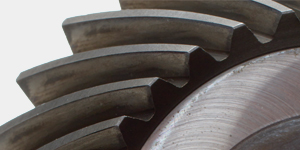


Spur and helical gears are among the most widely used mechanical power transmission elements in engineering systems. Although both gear types serve the same fundamental purpose of torque and speed transmission, they differ significantly in geometry, force distribution, stress behavior, noise characteristics, and manufacturing complexity.
This article presents a comparative analytical review of spur and helical gears, focusing on fundamental geometry, force components, simplified stress models, contact ratio considerations, and practical design trade-offs. The equations presented represent baseline analytical relationships commonly applied during preliminary gear design, while recognizing that standards-based methods and numerical tools are typically employed during final design stages. [2]
1 Introduction
Gears are essential components in mechanical systems ranging from automotive transmissions and industrial machinery to aerospace actuators and power-generation equipment. Among the various gear types available, spur and helical gears remain the most commonly used for parallel-shaft applications due to their robustness, reliability, and well-established design methodologies.
Spur gears are valued for their geometric simplicity, high efficiency, and ease of manufacture, while helical gears are favored in applications requiring smoother engagement, higher load-carrying capacity, and reduced noise and vibration. With increasing emphasis on compact design, noise reduction, and durability in modern machinery, understanding the comparative behavior of spur and helical gears remains an important aspect of mechanical design practice. [2, 3]
2 Spur Gear Fundamentals
Spur gears consist of straight teeth that are parallel to the gear axis. Load transmission occurs entirely in the transverse plane, resulting in relatively simple force interactions. (See Figure 1)

2.1 Geometry and Kinematics
For a spur gear with module m, number of teeth N, and pitch diameter d, the basic geometric relationship is seen in Equation 1.

The pitch line velocity is given in Equation 2:

where v is the pitch line velocity (m/s), d is the pitch diameter (m), and n is the rotational speed in revolutions per minute (rpm). [2]
2.2 Forces in Spur Gears
The tangential force responsible for torque transmission is seen in Equation 3.

where T is the transmitted torque.
The radial force acting on the gear teeth and bearings is seen in Equation 4.

where φ is the pressure angle, typically 20° for standard spur gears. Spur gears generate no axial force, simplifying bearing selection and shaft alignment. [3]
2.3 Bending Stress (Lewis Equation)
A widely used simplified bending stress estimate is provided by the Lewis equation (Equation 5):

where b is the face width and Y is the Lewis form factor. This equation provides a first-order estimate of tooth root bending stress and does not account for dynamic effects, local distribution, size factors, or reliability considerations. [2]

3 Helical Gear Fundamentals
Helical gears have teeth inclined at a helix angle β relative to the axis. This inclination results in gradual tooth engagement and smoother load transfer compared to spur gears. (See Figure 2)
3.1 Geometry
Helical gears are commonly specified using the normal module mn. The transverse module is related in Equation 6:

The pitch diameter is calculated in Equation 7:

where N is the number of teeth. [3]
3.2 Pressure Angles
Helical gears involve both normal and transverse pressure angles. The transverse pressure angle φt is related to the normal pressure angle φn in Equation 8:

A standard normal pressure angle of 20° is typically assumed in industrial gear design. [2]
3.3 Forces in Helical Gears
The tangential force is identical in form to that in spur gears, seen in Equation 9:

However, helical gears generate additional force components:
Radial force (Equation 10):

Axial (thrust) force (Equation 11):

The axial force is a defining characteristic of helical gears and must be accommodated through appropriate bearing selection and shaft design. [3]
4 Contact Ratio and Load Sharing
The contact ratio represents the average number of tooth pairs in contact during meshing and directly affects smoothness and load distribution. Spur gears rely solely on transverse contact ration, whereas helical gears benefit from an additional overlap due to the helix angle.
The total contact ratio for helical gears is expressed in Equation 12:

Where εa is the transverse contact ratio and εβ is the overlap contact ratio. The increased contact ratio in helical gears allows load sharing across multiple teeth, reducing localized stresses and vibration levels. [2]
5 Stress Analysis Considerations
Analytical stress models, such as Lewis bending stress and Hertzian contact stress, provide useful first-order estimates during preliminary gear design. However, modern gear design practice frequently incorporates standards-based methods, such as those provided by AGMA, along with numerical techniques for detailed validation.
Finite element analysis (FEA) is commonly used to evaluate tooth root bending stress, contact pressure distribution, and load sharing effects in high-performance gear systems. While detailed numerical analysis is beyond the scope of this review article, it remains an essential tool for final gear verification in industrial applications. [1, 4]

6 Comparative Summary
Table 1 summarizes the principal differences between spur and helical gears.
Helical gears are generally preferred in high-speed, noise-sensitive applications, while spur gears remain attractive for cost-effective, high-efficiency systems.
7 Selection Guidelines
When selecting between spur and helical gears, engineers should consider:
- Operating speed and allowable noise levels.
- Transmitted torque and power density requirements.
- Bearing and shaft design constraints.
- Manufacturing capacity and cost considerations.
- Overall system efficiency targets.
Spur gears are well suited for low-to-moderate speed applications where simplicity and efficiency are priorities. Helical gears are advantages in applications demanding smoother operation, reduced vibration, and higher load-carrying capacity.
8 Conclusion
Spur and helical gears each offer distinct advantages depending on application requirements. Spur gears provide simplicity, high efficiency, and ease of manufacture, while helical gears offer superior load sharing, smoother engagement, and reduced noise at the expense of increased complexity and axial loading. A clear understanding of their fundamental geometry, force transmission, and stress behavior enables informed gear selection during early stages of mechanical system design.
References
- AGMA. (2017). Fundamental Rating Factors and Calculation Methods for Involute Spur and Helical Gear Teeth (ANSI/AGMA 2101-D04). American Gear Manufacturers Association.
- Budynas, R. G., & Nisbett, J. K. (2020). Shigley’s Mechanical Engineering Design (11th ed.). McGraw-Hill Education.
- Maitra, G. M. (2001). Handbook of Gear Design. Tata McGraw-Hill.
- Reddy, J. N. (2015). An Introduction to the Finite Element Method (4th ed.). McGraw-Hill Education.


