





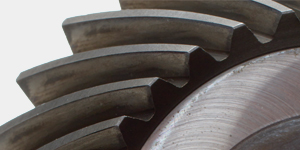

This article presents the results of tests performed on a back-to-back test rig for large module gears (center distance a = 508.33 mm, module mn = 25 mm) and on an FZG gear test rig (a = 91.5 mm, mn = 4.5 mm) in order to investigate the micropitting load carrying capacity using 5-axis milled gears. The fine machining using 5-axis milling influenced the topography and the macroscopic gear quality. After the load stage test, significant wear in form of a profile form deviation in connection with scrape marks could already be observed, in comparison to identical flank shape modifications of large-module gears. These can be attributed to a premature meshing impact, which is favored by the large, negative profile angle deviations fHα. In contrast, the average profile form deviation observed in the micropitting area correlates well with the small-module gear sets and those with large module but different machining process.
In general, the 5-axis milled gears exhibit similar wear depths in terms of micropitting, accompanied by a simultaneously larger micropitted damage pattern. The resulting 5-axis milled surface caused higher local contact stress, which resulted in an early wear phenomena and larger worn surface. A reduction in the oil injection temperature from 90°C to 60°C results in a smaller micropitting area and wear depth due to improved lubrication conditions, particularly on the micro-geometric surface of 5-axis milled, large-module gears. Furthermore, a test was conducted on a stream finished large gear pinion to assess the potential for post-machining. While the surface roughness was reduced, this was insufficient to compensate for the unfavorable surface in terms of micropitting caused by local topography maxima.
All the test results show it is important to ensure good geometric quality in the manufacturing of gears so gear meshing can take place undisturbed. During the machining process, it is of significant importance to pay close attention to the surface quality of the tooth flanks, in order to prevent the formation of contact pressure peaks on protruding flank areas, which would otherwise lead to accelerated wear caused by micropitting.

1 Introduction
The demands for high-quality drive technologies necessitate a relentless increase in power density and reduced delivery times, particularly for large gearboxes [1]. Concurrently, the manufacturing industry is striving to develop production processes that exhibit a high degree of flexibility, thereby enabling the prompt fulfilment of special customer requirements. In this context, 5-axis milling offers benefits regarding manufacturing options and degrees of freedom in the design of gears [2].
Moreover, the reliable prediction of micropitting in gearboxes remains a subject of ongoing research. Micropitting damage is not tolerated, particularly in critical applications such as wind energy, and leads to costly repair actions. One challenge in this field is that the micropitting load carrying capacity cannot be quantified numerically at present. One of the reasons for this are the additives used and their performance in the boundary and mixed lubrication regime. In order to calculate the micropitting load carrying capacity [3], it is necessary to quantify the profile form deviation via tests. These have been determined by the FZG-test-method [4] for the corresponding GFT class or have been standardized with the test results. In other projects focusing on large gearbox investigations [5–8], the influence of tooth flank design and operating conditions on the micropitting load carrying capacity have already been demonstrated. Here, a low surface roughness with an optimized flank shape modification proved to be advantageous, which ultimately led to the avoidance of micropitting.

However, the experiments on the micropitting load carrying capacity using large module gears (mn > 20 mm) have only been carried out on profile-ground gears. This manufacturing process offers advantages, particularly for series production and correspondingly large quantities, but requires special gear machining centers and tools [2]. For small series and retrofit solutions, such specialization can also be disadvantageous, as these benefits are offset by high initial costs, low flexibility, and a small circle of manufacturers. The flexibility in geometry generation by 5-axis milling allows for the efficient production of small series and special tooth profiles [9]. However, due to the manufacturing kinematics, 5-axis milled gears also exhibit a surface structure that differs from that of conventional manufacturing processes [9, 10]. The occurrence of fatigue phenomena, such as micropitting and pitting, is significantly influenced by the topography, in addition to the material technology and the lubricant physical influences [11].
This article examines the influence of 5-axis milling on the micropitting load carrying capacity through experimental investigation using the FZG-test-method [4]. Additionally, the macro- and micro-geometric deviations from the initial surface due to micropitting resulting from the milling process are analyzed using gear measurement centers and an optical surface measurement device.
2 State of the art
This section begins with a characterization of micropitting and an overview of the influencing tribological parameters. It then outlines the use of 5-axis milling in gear manufacturing, followed by a discussion on its application in the production of large gears with the need of flank shape modification.

2.1 Micropitting
The functional surfaces of gear flanks undergo a change during the initial load cycles [12]. Cyclic loading results in the appearance of fine surface cracks, which initially extend only a few micrometers from the tooth surface into the subsurface material layer [11]. It is typical for these cracks to occur within the asperity height and not to extend significantly below the surface, with a depth of no more than 10 µm [13, 14]. As a consequence of crack initiation, growth, and coalescence, microscopic pores occur. Figure 1 shows such a micropitted tooth dedendum with the characteristic porous micro-surface, which appears dull, etched or stained with grey patches [15].
The micropitting load carrying capacity is influenced by multiple parameters, including the gear geometry, the surface condition, hardness, the lubrication condition, and the operating conditions [16]. These influencing parameters determine the local near-surface load on the tooth flank and the chemical and physical interaction between the lubricant and the gear material. The lubricant exhibits several effects on the micropitting load carrying capacity. Investigations showed the micropitting load carrying capacity determined in the FZG-test-method rises when the viscosity increases or oil temperature decreasing due to the lubricating film thickness [17, 18].

In addition to the lubricant, the surface finish of the tooth flank has great influence on micropitting resistance. The degree of tooth flank roughness and the existing lubricant film thickness define the friction condition. Micropitting occurs in the mixed friction area. The relative lubricant film thickness λ is a critical parameter in determining the existing friction condition [3, 19]. This parameter is therefore used to determine the risk of micropitting. To quantify this parameter, tests were carried out varying the arithmetic mean roughness on large module gears and standard FZG gear test rig gears. Some results of FZG type GT-C gears show, that the micropitted area also increased with increasing tooth flank roughness [16]. In contrast to these tests, no increase in profile form deviation was observed on the large-module gears [6]. This could be explained by the smoothing of the large-module gears. In further investigations on the large gear test rig [8], it was found that an arithmetic mean roughness of Ra = 0.3 µm prevented the formation of micropitting on the gears. With even lower arithmetic mean roughness values, achieved by chemical-mechanical vibratory grinding of the tooth flanks, the roughness peaks responsible for the high friction and shear stresses are removed [8]. This results in optimum tribological conditions and prevents the formation of micropittings [20, 21].
The influence of gear size and module dependence on micropitting was investigated in several research projects [5-8, 16, 18]. These investigations showed the wear depths caused by micropitting do not increase with the ratio of the module from smaller to larger sizes. Instead, a distinction must be made between wear caused by micropitting and wear due to premature meshing impact. Due to the elastic deformation of the teeth, meshing begins before the start of action point A [8].

To avoid premature meshing, a flank shape modification proved to be beneficial. Concerning the addendum, consisting e.g. of a tip relief and a tip corner rounding the initial pressure peak can be equalized. However, this inevitably shifts the pressure distribution along the tooth flank and increases the Hertzian pressure on another flank area. Therefore, profile modifications increase the micropitting load carrying capacity if, as a result of the shift in the pressure distribution, the pressure peak is shifted from an area at risk of micropitting to an area less at risk. The investigations within [6] with linear tip relief, the maximal micropitting wear depth shifted from the start of the meshing toward the end of the double meshing area (Point B on path of action). A combination of a tip relief with ca = mn/125 with a tip corner rounding of rk = mn and a smooth transition from the involute into the modification provides an optimum flank shape modification derived from the tests in [8]. Figure 2 describes the different observed micropitting shapes and the most obvious causes as mentioned before in the dedendum flank. It is also possible that a superposition of the wear shapes occurs as described in [7].
2.2 5-axis milling
Conventional gear manufacturing requires the use of expensive tools that can only be used for a very limited part geometry. In these areas, 5-axis milling already offers an economically viable alternative. Due to the flexible machine kinematics of 5-axis milling, there are only a few restrictions with regard to the workpiece geometries. This makes it possible to produce gears that would not be possible with conventional manufacturing processes [2, 22] or would result in higher costs and delivery times due to tool availability.

The objective of [9] was to investigate the influence of process-specific properties on the flank fatigue of 5-axis milled spur gears with a module of mn = 4.5 mm. On the basis of these tests, an optimum manufacturing strategy could be determined that had little effect on the resulting flank properties. As a result, the load capacity of optimal 5-axis milled gears was comparable to that of profile-ground gears in a reference test — with the exception that these tests were performed using gearsets consisting of one 5-axis milled and one profile-ground gear.
Another research project investigated tool wear and the resulting properties of the component edge zone of 5-axis milled large gears [10]. It was possible to derive a tool wear criterion (VB < 40 µm) above which the edge zone is compromised. For this purpose, a wear mark width of VB = 38 µm was generated after the manufacture of a large gear (helical spur gear; da = 680 mm; mn = 18.3 mm) at a feed rate of approximately 1,000 meters. It was also found that a tool change during machining has a negative effect on the quality of the gear (e.g. runout Fr, variation of tooth thickness RS).
2.3 Discussion
As an interim conclusion, it can be summarized that micropitting wear on large-module tooth flanks can be reduced or even avoided by suitable flank modifications and low roughness values. In comparison, the use of 5-axis milling technology affords greater manufacturing flexibility and design freedom when creating gear geometry [2]. For instance, designing the tooth root fillet had otherwise been addressed to the hob geometry in the case of profile-grinding [23], or the modification of the addendum area [8]. On the other hand, 5-axis milling leads to geometrical deviations [2, 10] and also unfavorable surfaces due to overlapping tool paths [9]. This results in a compromise of machining time and quality that need to be considered.
3 Test samples and method
Within this article, the influence of 5-axis milled gears on the micropitting load carrying capacity is investigated via experiments. The experimental method correlates with the standard micropitting test according to DIN 3990-16 [4] using 5-axis milled gears and varying gear sizes.
The macroscopic test gear geometry is, according to the FZG type, GT-C gears “C gearing.” The gear size is scaled by the normal module. As micropitting is strongly affected by premature contacts, the large module test gears exhibit a moderate tip relief of Ca = 56 µm. In addition to the profile modification in the tooth height direction, a lead modification (flank line crowning and shift angle) of the pinion was also designed. The corresponding test gear data are given in Table 1.
In all tests with 5-axis milled gears, both wheel and pinion were produced using 5-axis milling. For reference, conventional FZG type GT-C gears according to DIN 3990-16 [4] were used.
The tests are carried out in accordance with DIN 3990-16 [4] using the load stage scheme (see Figure 3). The contact pressure at the pitch point is gradually increased in steps of 150 MPa from 800 MPa at load stage 05 (LS05) up to a maximum pressure at the pitch point of 1,550 MPa at LS10. The speed at the pitch point was 8.3 m/s during the entire test. After the first six load stages, each with 2.1 million pinion rotations, the stage test is completed with regard to micropitting resistance and the number of load cycles in the endurance test is increased to 10.5 million load cycles per stage in order to provoke fatigue damage.
Running the experiments with back-to-back test rigs with center distances of a = 91.5 mm [24] and a = 508.33 mm (see Figure 4) were used. Contrary to the mechanical loading of the conventional FZG gear test rig with a center distance of 91.5 mm, the large gearbox uses a hydraulic load application. This allows a high loading of the gears with an applied torque within the closed power loop. Only the power losses, e.g. due to mechanical and hydraulic friction, have to be compensated by a drive motor. Figure 4 on the right shows a photo through the service cover with the contact pattern control. This opening also allows intermediate checks to be carried out during the test.
Table 2 provides information on the relevant test points. Essentially, the geometric and surface topographical influences were tested using profile ground and 5-axis milled gears. In addition, the influence of size was investigated with two different modules (mn = 4.5 mm and mn = 25 mm). A lower test temperature and a post-machined pinion flank (stream finishing SF) are intended to provide information on the micropitting load carrying capacity in an application-related operation for large gearboxes.
4 Influence of 5-axis milling on gear quality and topography
In this section, the delivery condition of the test gears is documented and analyzed in terms of geometry and surface technology. Prior to testing, the gears were measured on a Klingelnberg PNC 65 gear measuring center. As already known from other research projects [2, 9, 10] with a focus on 5-axis milled gears, production-related quality deviations can occur. These mainly affect the profile and flank line quality as well as the pitch error [25]. For this reason, a measurement was carried out on each tooth of all gears. Moreover, roughness measurements were done to evaluate the surface condition.
In the case of machining by an external industrial partner, the focus on producing the flank modification described above prevents the use of the standard hobbing program available for 5-axis machining centers. In the end, the test gears were fine machined conventionally using a set of points. Furthermore, the manufacturing company did not have a gear measuring center. For this reason, the gears were manufactured directly in one single working step without a correction loop for possible geometric deviations. For the large module gears, achieved quality was Q=7-8 according to [26]. The profile angle deviation fHα, the total profile deviation Ff, the single pitch deviation fp and the tooth thickness variation Rs are particularly noticeable. There is also a clear scatter in the helix slope deviation fHβ of the gear.

In addition to the production-related features of the tooth geometry, these can also be observed on the surface of the tooth flank. To avoid tool collisions, an end mill with a spherical head was used instead of a cylindrical one. This has an effect on the surface finish of the gear. The faceted structure resulting from the line machining to create the involute and the feed marks along the flank line in the feed direction of the tool path is particularly striking, as can be seen in Figure 5, right. The involute is approximated according to the tool track via lineaments of the milling tool (see Figure 5, left). Two milling cutter lineaments (green) are used to create a material protrusion that approximates the ideal involute (blue).
In addition to characterize the surface, it is also necessary to consider the roughness of the surface. The information on the flank roughness (see Figure 5 table) in the profile direction is the surface roughness Sa (measured with Alicona infinite focus G4) and the arithmetic mean roughness Ra measured tactile (with Taylor Hobson Talysurf). Other approaches [9] that a description of the surface using the usual two-dimensional parameters, such as the arithmetic mean roughness Ra, are not suitable, could also be confirmed [25].
The characteristics of the facets are defined according to shape deviation Rth and roughness-width RW [9, 10]. The shape deviation Rth represents the dimension that results from the line processing via lineaments to generate the involute. This geometric ratio can be estimated before production using a theoretical shape deviation Rth-theo, and has a direct effect on the profile form deviation ff [9]. The distance between the peaks of the lineament edges in the topography is referred to as the surface roughness-width, RW (see Figure 6).

With the large module gears (mn = 25 mm), the superposition of the deviation in shape Rth, roughness-width RW, feed marks and periodic tooth trace waviness are smaller in relation to the tooth height and width than for the gears with mn = 4.5 mm. The false color image in Figure 6 indicates orange-green areas as local topography maxima, while the magenta-blue areas indicate corresponding minima.
The tactile arithmetic mean roughness of Ra = 0.48 µm is closer to the required 0.50 µm than the small-module gears with Ra = 0.55 µm. Despite a roughness width of RW,25 = 283 µm, which is larger than RW,4,5 = 185 µm, the shape deviation due to the larger radius of curvature with Rth,25 = 5.6 µm is smaller than that of the teeth with mn = 4.5 mm and Rth,4.5 = 7.1 µm. The shape of the profile also demonstrates the final machining step of the milling cutter with a round cutting edge.
In order to be able to better describe the wear processes, a distinction is made between the macroscopic and microscopic surface in the further analysis. The radii of curvature of the involute and the deviations due to tooth trace waviness and profile form deviation, which can be represented in the contact calculation, are assigned to the macroscopic surface. On a microscopic level, the very local effects at the roughness peaks are analyzed. The shape deviation Rth and roughness width RW as a result of the line machining and the feed marks are also counted here. The microscopic surface effects require more complex numerical simulations, these are not part of this work.
5 Experimental results for the micropitting load carrying capacity
The main goal of this work was to evaluate the influence of the 5-axis milling on the micropitting load carrying capacity. Within the experiments 5-axis milled gears of different sizes were tested with different load conditions. For reference standard FZG type GT-C gears were also used under identical test conditions.

5.1 Test results for the mn = 4.5 mm test gears
Figure 6, 7, and 8 show the influence of the manufacturing process on the micropitting load carrying capacity regarding mean profile form deviation ffm and micropitting damage pattern GF for module mn = 4.5 mm. Test no. 1 in blue shows the wear progress of the FZG type GT-C gear and test no. 2 the 5-axis gear results in red. The 5-axis milled gears suffer from wear even at lower load stages. The endurance test for the 5-axis milled gears was terminated after load stage DT 10/1 due to the occurrence of pitting. The conventionally ground gears show a delayed initiation of wear in the load stage test. In load stage 10 both variants exhibit a comparable dimension of the profile form deviation. In comparison to the test with the 5-axis milled gears, the wear of the profile ground sample stagnated without initiation of pitting. Thus, the test was stopped prematurely after DT10/2 without reaching the failure criterion. The flank shape modification of the 5-axis milled gear with a tip relief of Ca = 10 µm (s. Table 1) has not proved to be advantageous for the micropitting load carrying capacity in this specific case.

When evaluating the micropitting area (GF) in Figure 8, it is noticeable that the increase in the 5-axis milled gearing is more pronounced than in the type C-GF gearing. The test points outlined with boxes can be seen in detail in Figure 9. The comparison of the two stage tests shows that the wear volume and the micropitting area begin to grow significantly earlier and faster with the 5-axis milled gearing.
Figure 9 shows the results of the two load stage tests on 5-axis milled gears (top) and profile ground gears (bottom). The graph on the left shows the wear after load stage 10 in the profile section at the center of the face width. The worn material is colored red. For the 5-axis milled gears, the wear depth increases toward the pitch point beyond dE = 73 mm, whereas the FZG type GT-C gear does not exceed the tooth flank diameter dE = 70 mm after LS10. On the right, the same tooth flank is shown after LS10 in the load stage test and DT10.1 in the endurance test. As with the profile deviation, the micropitting area is also larger for the 5-axis milled gears compared to the profile ground type GT-C.

As illustrated in Figure 2, it can be proposed that the elliptical shape of the worn area of the non-modified FZG type GT-C gears in the tooth root was the result of premature meshing. In the specific case of the comparative test, it can be assumed the specific sliding and the lubricant film height must essentially be differentiated by the surface topography due to the identical microgeometry and the same kinematic viscosity of the lubricant of both mn = 4.5 mm gearings. If only the arithmetic mean roughness Ra is taken into account, like in the calculation of micropitting load carrying capacity [3], the significantly higher wear of the 5-axis milled gears with Ra = 0.55 µm compared to the GT-C gearing with Ra = 0.53 µm, in the area of the flank diameter 70 mm > dE > 72 mm, cannot be explained.
For a better understanding of the wear mechanism of 5-axis milled gears, a flank area after load stage 7 is analyzed in more detail in the following section.
Figure 9 on the left shows the profile section after operation at a contact pressure of 1,100 MPa at the pitch point. The flank picture in the middle for the same load stage shows the periodic flank line waviness in the appearance of wear. The detail displays that wear initially forms on the protruding flank areas to the ideal involute or to the shape deviation Rth, as a result of the line machining in the profile line direction ϕ. As the wear increases, the micropitting extends to the edges in the direction of the facewidth as a result of the feed marks κ. The intermediate stage appears as a kind of rectangle, which ultimately merges into the homogeneous micropitting area in the tooth root λ. Areas with a local topography maximum as described in section 4 show the most pronounced micropitting wear. The highest local contact pressure occurs at these edges, resulting in a frictional force that favors the growth of micropitting. This approach can also be used to explain the phenomenon of micropitting wear in the addendum flank at dE > 75 mm (see Figure 9, top left), which is less likely to be affected.
The tests on mn = 4.5 mm gears were used to describe the influence of 5-axis milled surfaces on the micropitting load carrying capacity. The local topography maxima resulting from the machining strategy accelerated the growth of micropitting. The wear mechanisms acting over a long period of time resulted in a relatively larger wear volume. For mn = 4.5 mm comparable tests [9] in which the wheel and pinion were also 5-axis milled show identical results with around 27% micropitting area compared to profile-ground gears with 15%.

5.2 Test results for the mn = 25 mm test gears
The investigations on the small size gears indicate a clear influence of the 5-axis milling process on the micropitting load carrying capacity. In particular, the facet-like surface structure has a load-reducing effect. The influence of 5-axis milling on the micropitting resistance of a large gear with mn = 25 mm, considering the geometrical deviations, is shown below.

Figure 11 shows the large-module pinion flank after the load stage test. The micropitting wear band, which takes up 22% of the active tooth flank, is clearly visible. Although the helix form deviation ffβ with Q = 1 is within the tolerance, the periodic tooth trace waviness can clearly be recognized in the flank photo on the right flank side. This demonstrates that individual parameters must be functionally constrained if they result in a reduction in micropitting load carrying capacity.

Figure 12 on the left shows the profile measurements before and after load stage test. The tooth geometry reveals a negative profile angle deviation fHα. This deviation is present on the left and right flank sides of both the test wheel and the pinion and leads to a higher tooth thickness in the dedendum, which causes meshing interferences [27]. Thus, the wear amounts of ff = 20 µm in the area of the scrape marks below the micropitting area (see Figure 12 right) could be explained. The amount of wear in the pure micropitting area 389 mm < dE < 401 mm is lower at ff = 9 – 12 µm and is at the level of the large module reference gearing with Øff = 7.2 µm [8]. As scrape marks primarily occur on non-modified gears, it can be assumed that negative profile angle deviations fHα can lead to a disturbed tooth mesh if the tip relief is compensated as a result of tooth deformation at high load stage levels. The scrape marks in the tooth root occur from LS09 (1,400 MPa) and can also be found in the tooth tip of the mating gear and the pinion.

Figure 13 shows the worn flank surface between the pure micropitting area in the tooth root and the pitch circle diameter, which was photographed using a scanning electron microscope (SEM). On the left-hand side of the image, a wear mark of the local topography maximum is shown in detail. The crystalline structure caused by the detachment of the flank material is striking.
The micropitting test was terminated after load stage 10 due to the occurrence of pitting. In addition to micropitting and scraping at the position of the engaging flank, several teeth showed pitting. The pitting imitation occurred in the area of micropitting close to the transition between scrape marks and micropitting. The pittings are relatively small, with an approximate area of 32 mm2, which is 1% of the active flank area.

As additional information, the effects of smoothing after the test are presented here, as previous projects [6] demonstrated better agreement between measured and calculated micropitting wear depth when the smoothed arithmetic mean roughness Ra after the test were used for calculating the specific lubricating film thickness λGF [3]. In the case of 5-axis milled gears, the average roughness values were found to be 28% lower at the pitch point and 10% lower in the tooth tip after the step test. However, in the case of 5-axis milled gears with mn = 4.5 mm, it is not possible to differentiate between single and double meshing areas due to the required measuring distance. With a decrease in average roughness of 18%, the results lie between those of the large gearing.
5.3 Temperature variation test results
In order to investigate the influence of the specific fluid film thickness, additional tests with a reduced lubricant temperature were carried out (see Figures 15 and 16 left). Reducing the lubricant temperature to 60°C, the increase in kinematic viscosity [28] leads to a relative doubling of the fluid film thickness according to [29].

The impact of the reduced test temperature is considerably more pronounced in the case of the large-module gearing. It can be observed that there is a notable reduction in the occurrence of micropitting following the initial load stage at 60°C in comparison to the same load stage at 90°C injection temperature with GF90°C,LS05 = 7%. This level of micropitting is only reached by the gearing tested at 60°C after load stage 09 with GF60°C,LS09 = 5%. At the end of the load stage test, a 40% smaller micropitting area GF60°C,LS10 = 9% can be measured compared to the test at 90°C injection temperature with GF90°C,LS10 = 22%.
The micropitting area (see Figure 16 left) clearly delineates the presence of multiple micropitting bands, which could be a consequence of the uneven load distribution along the profile line. However, the flank of the mn = 25 mm toothing at 60°C injection temperature also exhibits scrape marks in the tooth tip and beneath the micropitting area. Nevertheless, no pitting occurred. This suggests that the formation of pitting is favored by long-lasting, strong wear effects on the component surface.

6 Potential of post-machining via stream finish
The wear mechanisms shown so far can be explained as a result of the poor surface quality. In order to evaluate the potential post-machining possibilities of 5-axis milled tooth flanks with local topography maxima, the stream finishing process is utilized in this project. In the stream finishing process, components are clamped in a holder and immersed in a rotating container filled with grinding or polishing agents. The additionally rotating workpiece and the resulting relative movement between the component and the media ensure homogeneous processing without manual labor [30].
Following the stream finishing process, the pinion was measured again with the gear measuring center in order to quantify the removal. A reduction of half the tooth thickness of approx. 2 µm was determined by measuring the dimension over ball MdK. It can also be seen that this minor post-machining has no effect on the profile shape or tip relief and fits well with removal amounts in other investigations [31, 32]. The changes to the surface after the stream finish can be seen in Figure 14.
The results of the test conducted at an injection temperature of 60°C for the 5-axis milled initial surface (left flank) and the additional stream finished pinion flank (right flank) are presented in the subsequent diagrams in Figure 15. The actual amount of wear from both flank tests is shown in the center diagram. As can be observed, the maximum wear results from premature meshing impact in the form of a scrape mark. The average profile form deviation distributed over the circumference is ffm,LF = 12 µm and ffm,RF = 7.5 µm. If only the wear depth in the micropitting area is taken into account, the wear amounts are: ffm,LF = 3.5 µm and ffm,RF = 3.0 µm.
This slight difference between the two tests is also reflected in the micropitting area in Figure 16 for 60°C test (left) and additional stream finish (right). In relation to the total number of teeth, the average micropitting area of the left flank is GFLF = 14%, while the stream-finished tooth flank has GFRF = 13%.
Although the post-machining via stream finishing, with less influence on the flank shape modification, reduced the surface roughness by approximately 30%, the micropitting wear remained at a comparably high level due to the still existing pronounced micro-geometry and local topography maxima, which caused accelerated wear.
7 Conclusion
Based on the measurements and tests carried out, the following observation of micropitting wear on 5-axis milled spur gears can be summarized:
- Large-module gears (mn = 25 mm) with flank shape modification can be produced with 5-axis milling; arithmetic mean roughness Ra within the specification (0.4 µm > Ra >0.6 µm).
- Geometric measurement shows deviations (Q = 7-8) occurring in particular in the profile slope deviation fHα, profile deviation fF and helix form deviation ffβ.
- Surface characterization exposed local topography maxima (deviation in shape Rth, roughness-width RW, feed marks and periodic tooth trace waviness) . Achievable quality depends on the machining parameters and the resulting machining time.
- Micropitting wear starts at local topography maxima and protruding flank areas. Larger gears show less micropitting, as the ratio of surface deviations to tooth size is lower.
- Early occurrence of pitting in the micropitting area (mn = 25 mm) and pitch point (mn = 4.5 mm).
- A reduction in temperature leads to an increased lubricant film and thus to less micropitting.
- Micropitting load carrying capacity does not automatically increase when the surface is smoothed by post-treatment.
8 Acknowledgement
This work was supported by the German Federal Ministry of Economics and Energy (IGF 21284 N) within the framework of the Forschungsvereinigung Antriebstechnik e. V. (FVA project 286 V).
References
- H. Liu et al., “A Review on Micropitting Studies of Steel Gears,” Coatings, vol. 9, no. 1, p. 42, 2019.
- A. E. Mehr, Ed., Modern Green and Hard Machining of Double Helical Gears, 2022, Rosemont, 22FTM12.
- Calculation of load capacity of spur and helical gears – Part 22: Calculation of micropitting load capacity, ISO/TS 6336-22, 2018.
- Gears – FZG test procedures – Part 16: Determination of the micro-pitting load-carrying capacity of lubricants – FZG-test-method GT-C/8,3/90, DIN 3990-16, 2019.
- D. Haske, Großgetriebe: Graufleckentragfähigkeit von Großgetrieben. FVA Forschungsvorhaben 286I, Frankfurt, 2001.
- G. Lützig, “Großgetriebe–Graufleckigkeit: Einfluss von Flankenmodifikation und Oberflächenrauheit,” Dissertation Ruhr-Universität Bochum, Bochum, 2006.
- K. Nazifi, Einfluss der Geometrie und der Betriebsbedingungen auf die Graufleckigkeit von Großgetrieben. Dissertation Ruhr-Universität Bochum, 2010.
- C. Lohmann, “Zusammenhang von Ermüdung, Rissbildung, Verschleiß und Graufleckentragfähigkeit an Stirnrädern,” Dissertation Ruhr-Universität Bochum, 2016.
- J. Staudt, Flexgear I: Einfluss der Oberflächenstruktur beim 5-Achs-Fräsen von Verzahnungen auf das Einsatzverhalten. FVA Forschungsvorhaben Nr. 708 I, 2017.
- T. Lakner and R. Greschert, Flexgear 2: Einfluss des Werkzeugverschleißes auf die Bauteilrandzone und die Bauteillebensdauer beim 5-Achs-Fräsen von Großverzahnungen. FVA Forschungsvorhaben Nr. 708 II, 2021.
- M. Weibring, L. Gondecki, and P. Tenberge, “Simulation of fatigue failure on tooth flanks in consideration of pitting initiation and growth,” Tribology International, vol. 131, pp. 299–307, 2019.
- R. Martins, C. Locatelli, and J. Seabra, “Evolution of tooth flank roughness during gear micropitting tests,” Industrial Lubrication and Tribology, vol. 63, no. 1, pp. 34–45, 2011.
- Y. Ding and N. F. Rieger, “Spalling formation mechanism for gears,” Wear, vol. 254, no. 12, pp. 1307–1317, 2003.
- Y. Ding and J. A. Gear, “Spalling depth prediction model,” Wear, vol. 267, 5-8, pp. 1181–1190, 2009.
- R. Errichello, Ed., Morphology of micropitting, 2011, Cincinnati, 11FTM17.
- U. Schrade, Graufleckentragfähigkeit: Einfluß von Verzahnungsgeometrie und Betriebsbedingungen auf die Graufleckentragfähigkeit von Zahnradgetrieben. FVA Forschungsvorhaben 259I, 1999.
- B.-R. Höhn and K. Michaelis, “Influence of oil temperature on gear failures,” Tribology International, no. 37, pp. 103–109, 2004.
- S. Emmert, Turbograufleckigkeit II: Einfluß von Flankenrauhigkeit und hoher Umfangsgeschwindigkeit auf die Graufleckentragfähigkeit. FVA Forschungsvorhaben 54 III+IV, 1993.
- R. W. Snidle and H. P. Evans, “Elastohydrodynamics of gears,” in Elastohydrodynamics – ‘96 Fundamentals and Applications in Lubrication and Traction, Proceedings of the 23rd Leeds-Lyon Symposium on Tribology held in the Institute of Tribology, Department of Mechanical Engineering, vol. 32. Elsevier, 1997, pp. 271–280.
- R. W. Snidle, “Understanding Scuffing and Micropitting of Gears: Presented at NATO Research and Technology Organisation Specialists’ Meeting on the Control and Reduction of Wear in Military Platforms. AVT-109 RTO-MP-AVT-109, Vol. 14. NATO Research and Technology Organisation, Applied Vehicle Technology Panel,” in pp. 1–18.
- J. A. Brandão et al., “An approach to the simulation of concurrent gear micropitting and mild wear,” Wear, 324-325, pp. 64–73, 2015.
- VDI, Ed., F.: 5-axis milling and properties of spherical conjugated bevel gears: International Conference on Gear Production, Düsseldorf, 2015.
- R. Uelpenich and P. Tenberge, “Fast tooth root load capacity optimization based on improved design of hob geometry,” MATEC Web Conf., vol. 287, p. 1011, 2019.
- Gears – FZG test procedures – Part 1: FZG test method A/8,3/90 for relative scuffing load-carrying capacity of oils, DIN ISO 14635-1, 2000.
- A. Przyklenk, Ed., Holistic Evaluation of Involute Gears: AGMA, Chicago, 22FTM12, 2022.
- Cylindrical gears – ISO system of flank tolerance classification – Part 1: Definitions and allowable values of deviations relevant to flanks of gear teeth, ISO 1328-1, 2013.
- H. Linke, Stirnradverzahnung: .Berechnung – Werkstoffe – Fertigung, 2nd ed., München, Hanser, 2010.
- Prüfung von Mineralölen und verwandten Stoffen: Bestimmung des Viskosität-Temperatur-Verhaltens – Richtungskonstante m, DIN 51563, 2011.
- D. Dowson and G. R. Higginson, Elasto-Hydrodynamic Lubrication: The Fundamentals of Roller Gear Lubrication, Oxford, 1966.
- Otec, 22.02.2024, Available: https://www.otec.de/en/products/mass-finishing/stream-finishing-machines/.
- J. Vorgerd, “Wirkungsgrad und Fresstragfähigkeit schnelllaufender Stirnradverzahnungen mit chemisch glattgeschliffenen Oberflächen,” Dissertation Ruhr-Universität Bochum, Ruhr-Universität Bochum, Universitätsbibliothek, 2023.
- L. Winkelmann, The Effect of Superfinishing on Gear Micropitting: Gear Technology, 2009.


