





Due to the increasing demand for drivetrains with even higher power densities, high efficiency, and low noise emissions, new gearbox concepts with planetary gear sets are increasingly being developed. Internal gears with a high load capacity and geometric accuracy in a thin-walled design are required for these concepts. These requirements can be met in particular by hard-fine machined, case- or induction-hardened gears. However, the high hardening distortions of thin-walled components create major challenges for hard-fine machining, meaning there is currently no economical hard-fine machining process available for internal gears.
In the last 15 years, gear skiving has established itself as one of the most important processes for the production of internal gears in green machining. However, attempts to use the process in hard-fine machining have failed due to the limited tool life that can be achieved with tungsten carbide tools and the resulting quickly insufficient workpiece quality.
This article introduces a novel PCBN tool system for the high-quality, economical hard finishing of internal gears. The tool system is complemented by a highly specialized hard skiving machine. Application examples demonstrate how this technology machines internal gears to a quality of ISO class 5 or better, achieving tool lives exceeding 2,000 workpieces per re-sharpening.

1 Introduction
1.1 Profound changes in drive technology
In the last 10 years, the requirements for modern vehicle transmissions have changed massively, which is why transmission designs have changed and are still changing. Due to the increasing electrification of vehicles, the requirements are increasing in four areas in particular:
- Lower weights and lower use of raw materials.
- Higher gear ratios.
- Increased efficiency.
- Significantly lower noise emissions.
Hybrid and purely electric vehicles require weight-intensive batteries. In order to keep vehicle weight and payload within the target range, the motor transmission units must therefore achieve lower weights and higher power densities. To reduce overall costs, it is particularly important to reduce cost-intensive raw materials such as copper, electrical steel, and magnetic material. As the power is the product of torque and speed, an electric motor with the same power can be built in two ways: as a high-torque machine with low speed or as a high-speed machine with low torque. The volume of the active parts of the electric motor scales with the torque and therefore the weight. This is why an electric motor is significantly lighter and requires less raw material as a high-speed concept. On the other hand, high-speed drive units require gearboxes with higher gear ratios to transmit into the target wheel speed and torque range. In addition to the higher gear ratios, lower power losses are also required, as power losses, especially in electric vehicles, lead to direct unwanted reductions in range.

To achieve high gear ratios and high efficiency with high power density, planetary gearbox concepts are increasingly being used, as they enable compact housings and high power densities due to their principle. In particular, stepped planetary concepts are favored, as they can achieve transmission ratios of up to 21:1 with only two stages in the power flow. The power loss of a gearbox scales with the number of gear contacts in the power flow, which means such concepts achieve high levels of efficiency with just two gear stages. Figure 1 shows an example of such a high-speed motor gear unit with a stepped planetary gearbox on the left.
Due to the lack of masking noise from the internal combustion engine (ICE) in a hybrid vehicle in sailing or purely electric mode, as well as in a purely electric vehicle, noise emissions from the transmission come to the fore and must therefore be significantly reduced in these applications. Internal gears with an ISO class 10 quality were still sufficient for ICE driven transmission solutions, internal gears with ISO class 6 qualities are required for new electrified solutions [1]. For high-speed drives, the surface structure and waviness of gear flanks are particularly detrimental for noise, which is why qualities better than ISO class 5 for profile and flank form errors are often required. Moreover, a persistent trend toward reduced permissible flank roughness values can be observed, aiming to improve load carrying capacity [23]. These limits are now entering the polish grinding range, with Ra values below 0.15 µm.
In summary, the new drive trains of hybrid and electric vehicles use new transmission architectures that require internal gears and stepped planets as shown in Figure 1 on the right. These gear types are now required in large quantities and of high manufacturing quality with competitive production costs. This makes it necessary to develop and establish new production technologies for such gears.

1.2 Process chain for internal gears
Currently, there is no firmly established cost-effective solution for the flank hard finishing of internal gears in large-scale production. As a result, many internal gears in automotive applications are soft finished and subsequently nitrided. The simplified process chain is illustrated in Figure 2. Nitriding is a purely diffusion-based hardening method, which leads to lower and more uniform distortions compared to case hardening or induction hardening involving martensitic phase transformation. To achieve sufficient core strength in nitrided gears, the blanks must be highly tempered. This requires soft finishing at elevated material strength levels, typically about 1,000 MPa tensile strength. Consequently, cutting speeds must be reduced, and tool wear increases significantly. Combined with the long processing times of nitriding and the higher cost of nitriding steels, this process chain becomes economically unfavorable. Furthermore, due to the remaining distortions and surface alterations after nitriding, the achievable gear quality is limited to ISO class 7, with moderate noise, vibration, and harshness (NVH) behavior and reduced load carrying capacity compared to martensitic hardening.
Due to the high cost of nitrided internal gears, an alternative process chain, shown in the middle of Figure 2, has been adopted for certain applications. In this approach, components are soft finished and subsequently martensitically hardened, enabling high load carrying capacity. The use of cost-effective hardening methods and more economical soft machining at lower tensile strengths, typically below 700 MPa, results in significantly reduced overall process costs. Despite the application of advanced hardening technologies such as fixture hardening, vacuum hardening, or multi-frequency induction hardening, random hardening distortions remain. These distortions limit the achievable gear quality in large-scale production to ISO class 9. As a result, increased levels of noise, vibration, and harshness (NVH) may occur, which are often unacceptable in demanding applications, particularly in electric vehicles.

A high potential for both cost efficiency and quality remains when applying the established process chain for external gears that includes flank hard finishing, as illustrated in Figure 2 (bottom). This approach uses martensitic hardening, while soft machining is limited to generating a pre-gear profile with low accuracy requirements, further reducing costs in this step. After hardening, hard fine machining of reference surfaces is optional and depends on the gear assembly method. For example, if the gear is press-fitted into a housing, the joining diameter typically requires hard finishing. In the final step, the gear flanks must be hard finished. However, for internal gears, there is currently no solution available that combines consistently high quality with economic viability.
1.3 Process for the hard-fine machining of internal gears and stepped planets
In hard-fine machining, achieving the required quality is a fundamental prerequisite. At the same time, demands for process flexibility and productivity continue to rise. Figure 3 classifies the most important hard finishing processes based on their productivity and flexibility. The ideal process, combining both attributes, would be in the upper right corner of the diagram.
Generating grinding, the benchmark process for flank hard finishing of external gears, is often unsuitable for stepped planetary gears. This is due to potential collisions between the grinding tool and adjacent larger gears, which act as interfering contours. Internal gears also cannot be processed using this method, as the worm-shaped tool would collide with the workpiece. Similar limitations apply to skive hobbing.

Internal gear honing is restricted by tight geometric and technological boundaries, such as limited cutting speeds and tool dimensions, resulting in high process costs [3]. Dressable honing stones offer short tool life between dressing cycles, and the small tool sizes exhibit low form stability and limited robustness against variations in blank quality. This becomes particularly problematic with increasingly thin-walled internal gears that exhibit significant hardening distortion, often leading to premature tool failure. Non dressable cubic boron nitride (CBN) based honing tools, while offering better tool life, show considerable variation in tooth flank surface roughness over their lifespan. Newly exposed sharp diamonds can produce roughness values around Rz 5 µm. As the diamonds wear and become rounded, surface roughness improves. In high-volume automotive production, such fluctuations in surface quality over the tool’s life are considered critical.
Internal generating grinding improves upon honing by enabling higher axis crossing angles and cutting speeds, thereby increasing productivity. However, this also raises the risk of grinding burn [4]. Issues related to robustness and surface roughness remain largely unresolved. Typically, internal generating grinding with corundum achieves surface roughness values at about Ra 0.3 µm. Recent developments in internal polishing using the same kinematics have shown potential to reach Ra values as low as 0.1 µm [5]. Due to geometric constraints, it is not feasible to combine grinding and polishing into a single tool with an economical tool life, as is possible with external gears. Instead, two separate tools and process steps are required, increasing handling complexity and cost.
Hard gear skiving is still a relatively new process in terms of research maturity, offering substantial potential for further development. Studies have shown that its stable, geometrically defined cutting edge is highly robust against hardening distortions and can even operate without protuberance [6]. Applications using conventional coated carbide tools demonstrate that ISO class 6 internal gears for automotive use can be produced with extremely short cycle times, maximizing productivity. Moreover, machining processes with geometrically defined cutting edges have shown that, with properly designed microgeometry, low surface roughness and optimal heat dissipation via chips can be achieved in dry conditions without the risk of grinding burn. Gear skiving allows extensive correction of gear geometry through fine kinematic adjustments, resulting in high process flexibility. For instance, crowned gears with minimized twist errors can be skived without tool modifications, simply by adapting the kinematics across the workpiece width [7]. Overall, hard gear skiving shows great promise in meeting the demanding requirements of hard-fine machining for stepped planetary and internal gears.

1.4 State of the art hard gear skiving of internal gears
Gear skiving is a continuous machining process to produce rotationally symmetrical, periodic structures. Due to its high productivity combined with high flexibility, gear skiving has established itself in gear machining over the last 15 years [8]. The continuous helical rolling motion creates surfaces with a characteristic surface topography similar to gear shaving [9]. These have a positive effect on the tribological properties of the gear [10]. In the 1980s, the tooling materials, coatings, and machine controls only allowed for short and uneconomical tool life in the hard skiving process [10, 11]. In recent years, hard skiving has increasingly been the subject of research [6]. Thanks to advances in machine technology, hard skiving now offers great potential for cost-effective hard finishing of case-hardened internal gears [12].
For example, a thick-walled, case-hardened internal gear, for commercial vehicle applications, was successfully hard skived to DIN class 4 gear quality with roughness Ra < 0.3 µm and Rz < 1.5 µm in a single flank process [13]. An automotive internal gear with a protuberance pre-profile was successfully machined with high productivity in DIN class 6 [14]. Ultra-fine-grained carbide tools with AlCrN-based coating systems were used [15]. The cutting speeds here are between 40 and 90 m/min.
The achievable tool life in hard skiving with carbide tools is typically between 50 and 150 workpieces. For example, in [22], for a component with a module of 1.63 mm, 92 teeth, and a width of 24.4 mm, 80 components per tool regrind are achieved with tool reconditioning outside the machine. At current exchange rates, the tool costs per part are $5.30. At the same time, a solution is shown for this component with tool reconditioning in the machine without coating the rake surface. The tool life per regrind is reduced to 10 parts per component, whereby the tool can be reground 200 times, resulting in a tool life of 2,000 parts per tool [22]. The tool life is limited by the profile form error ffα, which is in quality class 6 before regrinding. The lower reconditioning costs reduce the tool costs per part to $2.30 per workpiece [22]. Zapf et al. show measured wear values at the cutting edge of 78 µm after a total manufactured gear length of 1.07m for a planetary gear of an industrial gearbox with 23 teeth, protuberance pre-profile and a hardness of 58+4 HRC, see Figure 4 [15].

Heat treatment typically causes significant changes in gear geometry. These changes are driven by so-called distortion potential carriers [16], such as phase transformations, shrinkage, and residual or thermal stresses [17]. The resulting component distortion is the cumulative effect of these factors throughout the entire manufacturing process chain. Thin-walled, ring-shaped components are particularly susceptible to severe hardening distortions due to highly variable residual stresses introduced during soft machining [18].
Figure 5 illustrates an example of shape and quality changes caused by case hardening [6] in a thin-walled automotive internal gear with a gear rim thickness of just 4 mm. A key observation is that such internal gears become significantly oval after hardening. In this case, the roundness deviation of the outer diameter increases from 32 µm to an average of 175 µm. Some parts exhibit even greater distortion, with worst-case roundness values reaching up to 245 µm. These second-order oval distortions manifest as a “peanut” shape in the enlarged measurement protocol.
Simultaneously, the flatness of the component also distorts in a second-order pattern, resulting in a “stacked potato chip” shape. In this example, flatness changes from an average of 16 µm to 79 µm. Due to the thin-walled nature of the component, the distortions of the internal gear teeth closely follow the external reference surfaces. As a result, the “stacked chip” shape dominates the wobble of the flank line angle, while the ovality primarily affects the gear runout.
Typical hardening distortions lead to characteristic variations in cutting conditions during hard-fine machining of thin-walled internal gears. Figure 6 shows two tooth gaps from the same component, offset by 90°. The gap on the left corresponds to the area with the maximum actual machining stock, caused by oval runout due to hardening distortions. The gap on the right represents the area with the minimum actual machining stock. The light gray regions indicate the soft-machined and hardened surfaces, while the dark to black areas show the hard-finished tooth flanks. In the region with minimal stock (right), remnants of the protuberance and tip chamfer from soft machining are clearly visible. In such areas, pre-machining and nominal stock allowance must be carefully designed to ensure all material within the form circle diameters is fully finished. In contrast, at the maximum stock allowance (left), the tip chamfer is completely removed, and the hard-skiving process cuts deeply into the tooth root fillet. The tool must be sufficiently robust to handle these demanding conditions.

The machining stock fluctuates twice over the circumference due to hardening distortions, which is critical because cutting forces during hard skiving are largely influenced by the stock allowance [15]. The machine must exhibit very low compliance at the relevant characteristic frequencies to prevent displacement between tool and workpiece in areas of high stock. This ensures hard skiving compensates for hardening distortions rather than following them [6]. Additionally, all axis drives must possess high dynamic control within the characteristic frequency ranges to counteract machining forces and prevent positional deviations.
In addition to a high-precision, high-performance tool and a rigid, dynamically responsive machine, the clamping device plays a crucial role in the success of hard skiving.
Figure 7 illustrates the interaction between the flatness of the face contact surface and the wobble error of the flank line angle when using an axial clamping system. The deviations over 180° of the workpiece’s polar angle are evaluated on the right side of the figure. The gray data points represent the flank line angle deviations of individual teeth after hardening, based on actual measurements. The green curve shows the results after hard skiving. The deflections exhibit opposite signs, indicating the deviations are not caused by insufficient system rigidity or inadequate axis drive dynamics. Instead, the root cause lies in the elastic deformation of the workpiece during clamping and its reverse deformation upon unclamping, which is influenced by the flatness of the face contact surface.
The flatness profile of the contact surface is shown as a black line. The red line represents the result of a non-linear finite element simulation of the clamping and unclamping process, predicting the wobble error of the flank line angle due to reverse deformation. The close agreement between the red simulation and the green measured results highlights the critical importance of the clamping system in determining the final gear quality [6].

2 Objectives
Modern drive technology places increasingly stringent demands on the quality and load-bearing capacity of gears. New gearbox designs frequently require internal gears that meet these high standards. However, current state-of-the-art methods for the hard-fine machining of internal gears, especially processes with a geometrically undefined cutting edge, exhibit significant limitations. These challenges include achieving the desired surface roughness, maintaining form stability, and ensuring tool robustness against total failure during large hardening distortions. Hard skiving, which uses a stable, geometrically defined cutting edge, has shown great potential for overcoming these issues. Nevertheless, the cost-effectiveness of current solutions using carbide tools is severely limited by high tool wear. The aim of this work is the investigation and evaluation of the technological and economic performance of a specially developed skiving tool made of polycrystalline cubic boron nitride (PCBN) in combination with a tailored machine tool. The focus will be on the reliably achievable workpiece qualities, surface roughness, the tool life, and the resulting tool costs per part.
3 New solutions for hard gear skiving
This investigation focuses on a newly developed tool system featuring an innovative cutting material for hard skiving. To address the strong interdependencies between mechanical, control, and process domains identified in the state-of-the-art, a dedicated machine with customized control architecture, monitoring system, and a gear skiving process simulation was co-developed.
3.1 Hard gear skiving machine
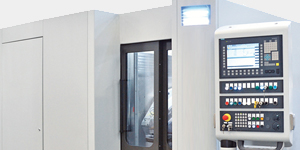
The development of the new machine started from scratch, without any legacy constraints. It was purpose-built and optimized specifically for the demands of hard skiving. Figure 8 illustrates the complete machine (left) and its patented structural design (right) [19]. The system is a 6-axis vertical machine, with all axes operating in fully closed-loop control. This configuration enables advanced functionalities such as axis crossing angle adjustment across the workpiece width, essential for twist control skiving.

Designed for components up to 300mm in diameter and a module range of up to 3mm, the machine features a highly rigid structure. With a mass of 14 tons, solid linear guides, gantry drives on the Z and Y axes, and an HSK-F 100 tool interface, the mechanical foundation ensures exceptional stability. As with any multi-mass machine tool system, certain modal frequencies exhibit lower rigidity. A key innovation of the RS 300 design is its broad frequency range of high dynamic stiffness, specifically tuned to the excitation characteristics of hard skiving at elevated cutting speeds, such as tooth meshing frequencies and second-order harmonics of the workpiece spindle speed induced by typical hardening distortions.
The control behavior of the machine’s axis drives is specifically tuned to maximize dynamic performance at those characteristic excitation frequencies. To achieve this, the system incorporates a range of advanced control algorithms. Since different tool holders and workpiece clamping setups significantly alter the relative mass inertia of the rotary axes, using generic spindle control parameters would result in substantial losses in dynamic response. However, precise and highly dynamic synchronization of the rotary axes within the electronic gearbox is essential for achieving high-quality gear skiving and compensating the hardening distortions. Therefore, during the setup process, each rotary axis is characterized individually for the specific process configuration. Based on these measurements, the spindle control parameters are automatically adjusted to achieve the highest possible dynamic behavior, operating close to the stability threshold for optimal performance.
Precise alignment of the tool teeth within the gaps of the workpiece teeth is critical for achieving high-quality hard skiving results. This requires accurate knowledge of the relative positions of both tool and workpiece teeth. To ensure this, the machine is equipped with a high-precision laser bridge located near the machining area, which measures the tool geometry after each tool change. Workpiece positioning is determined using a relearning induction sensor, which includes compensation functions for external disturbances such as thermal drift. These measurements are repeated at configurable intervals to maintain positional accuracy throughout the process.

Since hard skiving achieves optimal tool life under dry machining conditions, the machine was designed as a fully dry system. This required comprehensive chip and thermal management to ensure long-term repeatability and precision of the machine axes. In addition to process efficiency, dry machining offers significant potential for reducing the CO2 footprint per gear, as it eliminates the need for cutting fluids and allows direct recycling of chips without prior separation from oil or corundum.
3.2 PCBN hard gear skiving tools
Polycrystalline cubic boron nitride (PCBN) is a high-performance cutting material, well established in hard turning as well as in the machining of gray and hard cast iron. Its effectiveness in these applications is well documented. PCBN is a composite material available in a wide range of variants, similar to cemented carbide. Key factors influencing its performance include the CBN grain content, grain size, and binder phase. Typical substrates contain between 50% and 90% CBN with grain sizes ranging from 1.5 to 4 microns. Substrates with finer grains and lower CBN content are generally used for continuous or lightly interrupted cutting processes. In contrast, substrates with coarser grains are preferred for heavily interrupted operations such as gear skiving, due to their improved toughness. The binder material plays a decisive role in determining both the fracture resistance and thermal behavior of PCBN. Binders based on AlWCoB have demonstrated particularly high resistance to edge chipping. Additional phases within the binder are engineered to direct process heat into the chip, thereby preventing thermal damage to both the tool and, critically, the workpiece. Due to the varying force fluctuations and gradients at the cutting edge, strongly influenced by the axis crossing angle, it is not practical to use a single PCBN grade for all hard skiving processes and workpiece geometries.
The extreme hardness of CBN presents significant challenges in tool manufacturing. While single-tooth tools can still be produced effectively using large grinding wheels, the production of full toothed tools with minimal deviations and lowest edge chipping is particularly demanding. Over the past decade, Reishauer has developed a novel tool manufacturing process that enables the production of such tools, as used in this study. A key feature of this process is the ability to locally vary the microgeometry of the cutting edge along the cutting profile, such as edge rounding and protective chamfers. This allows precise adaptation to the highly variable cutting conditions encountered in hard skiving, see Figure 9. The patented radius-dependent microgeometry [20] enables a tailored balance between sharpness and surface finish. Tools produced with this method can be reconditioned up to two times for modules in the 1-2mm range, and up to three times for larger modules.

Unlike generating grinding, hard skiving does not allow dressing of the tool on the machine because the cutting edges are geometrically defined and remain stable. Therefore, in addition to a tool design with a suitable number of teeth [6], minimal clamping errors are crucial for achieving high machining accuracy, especially with regard to low form deviations. To meet these requirements, the new tool system was complemented by tool holders with high-precision interfaces and carefully adapted tolerances. These holders are designed to allow kinematic adjustments for twist and profile corrections without causing collisions. At the same time, they are optimized to ensure excellent dynamic stability and vibration behavior.
The tooling system is complemented by mechanical and hydraulic centric clamping devices, designed for components with well-defined reference surfaces such as internal gears. These gears are typically assembled into housings and clamped via their joining surfaces. In addition, axial point clamping solutions are available for internal gears that are mounted in a self-centering manner on planetary systems and therefore require low-deformation clamping. The dynamic behavior and chip evacuation characteristics of clamping devices are specifically tailored to the demands of hard skiving and machine behavior.
3.3 Technology and digital solutions
Gear skiving involves highly variable cutting conditions that change both over time and across the cutting edge. In contrast to gear hobbing, not only does the chip thickness vary, but also the clearance and rake angles along the cutting path. Additionally, gear skiving presents a high risk of collision, a pronounced sensitivity to tool errors transferred to the workpiece, and a strong dependency of chip formation on the tool geometry. To address these challenges and ensure consistently high-quality results, 3D process simulation is essential. This includes predictive models for tool load and the resulting workpiece quality.
Figure 10 (left) shows an example of the predicted surface topography of the left and right flanks for an off-center hard gear skiving process, where both flanks are machined separately at high feed rates. Process-induced vibrations can be approximated using an integrated cutting force model combined with a semi-empirical frequency response model. This model considers the compliance characteristics of the machine, clamping system, tool, and tool holder, enabling realistic simulation of dynamic behavior under actual machining conditions. Using this simulation in combination with waviness analysis, deviations that could negatively affect noise, vibration, and harshness can be identified and eliminated during the design phase.

As part of this work, a two-stage, software-based design process was implemented using 3D process simulation. In the first stage, an optimized macro-level process layout is developed for each individual workpiece. This layout is primarily defined by parameters such as axis crossing angle, eccentricity, number of tool teeth and tool profile shift. In the second stage, the cutting strategy is refined by considering actual hardening distortions. This includes the definition of roughing and finishing strokes, cutting speeds, feed rates, and the cutting-edge microgeometry.

The well-established ARGUS monitoring system [21] enables comprehensive monitoring and optimization of both the machine and the process, similar to its application in grinding. Hard skiving and the skiving machine represent the first processes and products to be developed and optimized through the consistent use of ARGUS. The system not only supports process monitoring during hard finishing, but also allows correlation between the quality of input parts and the resulting quality of the finished workpieces. For example, variations in hardness between parts or even within a single part can be detected and linked to deviations in flank quality. In this way, ARGUS makes previously invisible influences visible and, more importantly, controllable in the high-speed and otherwise inaccessible hard skiving process.
The user interface of the machine has been designed to align with established standards from gear-finishing applications. Comprehensive plausibility and safety checks help prevent operational errors, increase machine availability, and reduce scrap. Gear correction inputs remain straightforward. The operator enters the desired values for profile angle, flank line angle, crowning, point correction, or twist. The system then automatically calculates all necessary process adjustments while ensuring that collision limits are not exceeded. Figure 10 (right) shows an example of the correction interface.
4 Practical Evaluation – Application examples
4.1 Typical use case – internal gear of a battery electric vehicle
Typical internal gears used in purely electric vehicles fall within a module range of 1 to 2 mm, with gear diameters between 120 and 250mm. Table 1 summarizes the gear specifications for such a component, which is shown on the left side of Figure 11.

For this example, a conical PCBN tool with 85 teeth was designed using the method described above. The PCBN hard gear skiving process achieves a process time of 81 seconds per part, measured from NC start to NC stop. A four-stroke strategy is applied, consisting of one roughing and one finishing stroke per flank. The component was green-machined with a stock allowance of approximately 100 µm and included a protuberance. Hardening was performed via low-pressure carburizing followed by high-pressure nitrogen quenching. As expected, the part exhibited characteristic hardening distortions, particularly oval runout, with post-hardening gear runout values ranging between 80 and 160 µm. The component was axially clamped on double-face ground surfaces, with radial centering on the outer diameter.
Figure 11 (right) presents a one-dimensional roughness evaluation of the finished tooth flanks. For tactile measurement, tooth segments were separated from the test components using wire EDM.
The measured surface roughness values were Rz < 0.6 µm and Ra < 0.1 µm on both flanks. Additionally, a two-dimensional tactile surface analysis is shown in Figure 11, including the Abbott-Firestone curve. The Spk value (equivalent to Rpk in 2D surface analysis) was found to be below 0.13 µm.
These roughness results underscore the high performance of the new PCBN hard gear skiving, achieving surface qualities comparable to polish grinding.
The classic gear measurement protocol is presented in Figure 12, with all features magnified at a scale of 1000:1. All gear characteristics fall clearly within ISO quality class 5. While runout and total pitch still exhibit the typical ovality resulting from hardening, the gear runout was significantly improved from an average of 120 µm to less than 20 µm through the hard gear skiving process. This demonstrates the minimal tendency of the new tool and machine technology to follow hardening distortions.
Particularly noteworthy are the very low form deviations in ffα and ffβ, which are characteristic of the PCBN hard gear skiving. These low deviations are especially beneficial for minimizing high-frequency noise excitation in gearboxes. Figure 13 shows a topography measurement of a complete tooth across 50 flank lines, along with the corresponding spectral analysis derived from an all-tooth measurement followed by waviness analysis.
4.2 Tool life test – internal gear of a plug-in hybrid
To validate the performance of the new technology, testing was conducted not only under controlled laboratory conditions at the Tech Center, but also under real world industrial conditions. For this purpose, a test machine was installed at a partner site: an automotive supplier located in Michigan.

The gear shown in Figure 14, with specifications summarized in Table 2, was manufactured there in extensive tool life trials. A cylindrical tool with 55 teeth was used. A three-stroke strategy was applied. The leading flank was machined using one roughing and one finishing stroke, while the trailing flank was finished in a single stroke. This cutting strategy is derived from the 3D process simulation and is based on the pronounced asymmetry of gear skiving with respect to local cutting conditions.
With an average machining allowance of 55 µm, the process time was 36 seconds per part, resulting in an average tool life of 2,700 parts in gear quality ISO class 5. This corresponds to a cumulative gear width of 70 meters. Once this tool life is reached, the tool can be resharpened twice and reused. A key advantage of the PCBN tool technology is its high performance without coating, which eliminates variability in results after re-sharpening due to de-coating and re-coating effects.

The cost of the tool, including reconditioning, results in a tool cost of $1.50 per workpiece.
To demonstrate the robustness of the tool’s stable geometrically defined cutting edge, additional tests were performed on blanks with a machining allowance of 120 µm, without protuberance. Despite the tool cutting deeply across the tip rounding in these conditions, tool lives of 1,600 parts per resharpening were achieved.
The tests with protuberance were conducted in single-shift operation, producing the first 2,500 parts over several days. No corrections were applied during this period, and the machine was not explicitly warmed up each morning. The fluctuation in the over-ball dimension across the first 2,500 parts was 26 µm, as shown in Figure 14.
After the initial run, the trial was paused for four months due to blank availability. During this time, ambient temperatures varied from 75°F to 10°F.
Upon resuming the tests, no corrections were made, and the change in the over-ball dimension remained below 40 µm, demonstrating the high thermal stability of the new machine.
Figure 15 illustrates the change in classic gear measurement charts between part 700 and part 2,600, covering the full tool life. Notably, there is no significant change in the flank lines or the left profile. The form deviation ffα remains below 1.5 µm throughout the tool life.
The right profile shows a slight increase in profile crowning of approximately 1 µm due to tool wear. The form deviation ffβ increases from less than 1.5 µm to less than 2.5 µm, which is still within ISO class 3 tolerances.

5 Conclusion
This study demonstrates that hard gear skiving with PCBN tools offers a technically and economically viable solution for the hard finishing of internal gears, particularly in applications with high demands on gear quality. Compared to conventional carbide tools, the use of PCBN enables a significant extension of tool life, with up to 2,700 parts per resharpening, while maintaining consistently high gear quality.
The achieved surface roughness values below Ra 0.1 µm and total gear qualities of ISO class 5 or better confirm the suitability of the process for noise-sensitive applications, such as electric vehicle drivetrains.
A key advantage of the PCBN tooling system lies in its ability to maintain low form deviations (ffα and ffβ) throughout the tool life. These deviations remain well within the limits of ISO class 4, even under varying cutting conditions and hardening distortions.
From an economic perspective, the potential cost savings per part are in the region of 30% when comparing the most competitive carbide hard skiving solution with the new PCBN approach. These savings are primarily driven by the extended tool life and reduced reconditioning frequency, while simultaneously improving workpiece quality.
In conclusion, the integration of PCBN tools with a dedicated hard skiving machine enables a high-performance manufacturing solution for internal gears. The approach combines improved gear quality, extended tool life, and reduced cost per part, making it a promising candidate for future drivetrain applications requiring precision, efficiency, and scalability.
Bibliography
- Kleiber, T. (2019). DIN Q6 meets DIN Q10 – Need for modern internal gear production, VDI-Reports Nr. 2355, 415-424
- Daniel, B., Biermann T. (2017). eAxle Family in Coaxial and Offset Arrangements, 16th International CTI Symposium Automotive Transmissions, HEV and EV Drives, Berlin
- Yanase, Y., Komori, M., & Ochi, M. (2018). Grinding of internal gears by setting a large crossed-axes angle using a barrel-shaped grinding wheel. Precision Engineering, 52, 384-391.
- Klocke, F., & Brecher, C. (2023). Gear and transmission technology: design-manufacture-analysis-simulation. Carl Hanser Verlag GmbH Co KG.
- Spatzig, A. (2025). Hard fine machining of internal gears to meet requirements, Grinding conference, Fellbach, Germany, January 29 – 30, 2025
- Hilligardt, A. (2024). “Quantification and modeling of the influences of process input and control variables during hard skiving on the manufactured gear quality of thin-walled internal gears – HarDing” German research project report, German Machine Tool Builders’ Association
- Hilligardt, A., & Schulze, V. (2023). Gear skiving with minimum twist errors: Modeling and optimization of flank twist in gear skiving. Forschung im Ingenieurwesen, 87(3), 997-1007.
- Bauer, R. (2018). Model-based design of multi-cut strategies for gear skiving, PhD thesis, Chemnitz University of Technology
- Trübswetter, M., Otto, M., & Stahl, K. (2019). Evaluation of gear flank surface structure produced by skiving. Forsch Ingenieurwes, 83, 719-726.
- Bausch, T. (2011). Innovative gear manufacturing: Processes, machines and tools for the cost-effective production of high quality cylindrical gears. expert Verlag
- Faulstich, I. (1986). Current processes for machining the flanks of case-hardened cylinder wheels, dima “die maschine”, Vol. 111, No. 6
- Weber, G.-T. (2019). New possibilities for dry hard finishing of internal gears, VDI-Reports, Nr. 2355, 1659-1664
- Weppelmann, E. (2017). Hard fine machining of internal gears using power skiving, Seminar fine machining of gears, WZL Aachen, November 8-9, 2017
- Weber, G.-T. (2017). HARD SCUDDING – Dry hard finishing of gears, Seminar fine machining of gears, WZL Aachen, November 8-9, 2017
- Zapf, M., Klose, J., Zanger, F. u. Schulze, V.: Analysis of process forces and surface topography when manufacturing case-hardened gears by double flanked hard skiving, VDI-Reports Nr. 2355, 1647-1658, 2019
- Hoffmann, F., Kessler, O., Lubben, T., & Mayr, P. (2004). “ Distortion engineering”-Distortion control during the production process. Heat Treatment of Metals, 31(2), 27-30.
- Gießmann, H. (2016). Heat treatment of gearing parts: Effective technologies and suitable materials. expert verlag.
- Kessler, O., Prinz, C., Sackmann, T., Nowag, L., Surm, H., Frerichs, F., … & Zoch, H. W. (2006). Experimental study of distortion phenomena in manufacturing chains. Materials science and materials engineering: development, production, testing, properties and applications of technical materials, 37(1), 11-18.
- Kirsch, R., Mros, M., Müller, M., Sennhauser, E. (2025). Machine tool and method for the roll machining of rotational parts having groove-shaped profiles (EP3999273B1). European Patent Office
- Hänni, F., Haufe, F., Kirsch, R., Marx, H. (2020) Hob peeling tool and method for hard-fine machining of pre-toothed workpieces (EP3528989B1). European Patent Office
- Graf, W., (2024). Hard fine machining optimized through digitalization – ZF Brandenburg customer experience for process monitoring in gear production, VDI-Z
- Kreschel, J. (2021). Hard skiving – improved quality and cost savings through integrated sharpening, 4. Technical seminar on power skiving, IWU Chemnitz, September 15, 2021
- KRANTZ, T. (2002). Gear Durability improved by Superfinishing. NASA Research Center Glenn.


